



Space-Dyed vs Twisted Carpet Yarn
TL;DR
Space dyeing and twisting describe different parts of yarn making, so they are not an either-or choice. Space dyeing places colour in sections along the yarn. Twisting combines or turns yarn components and can change the texture and colour blend. One carpet yarn may use both. Choose a carpet tile by viewing the finished colourway, texture and layout in your room—not by picking a process name.
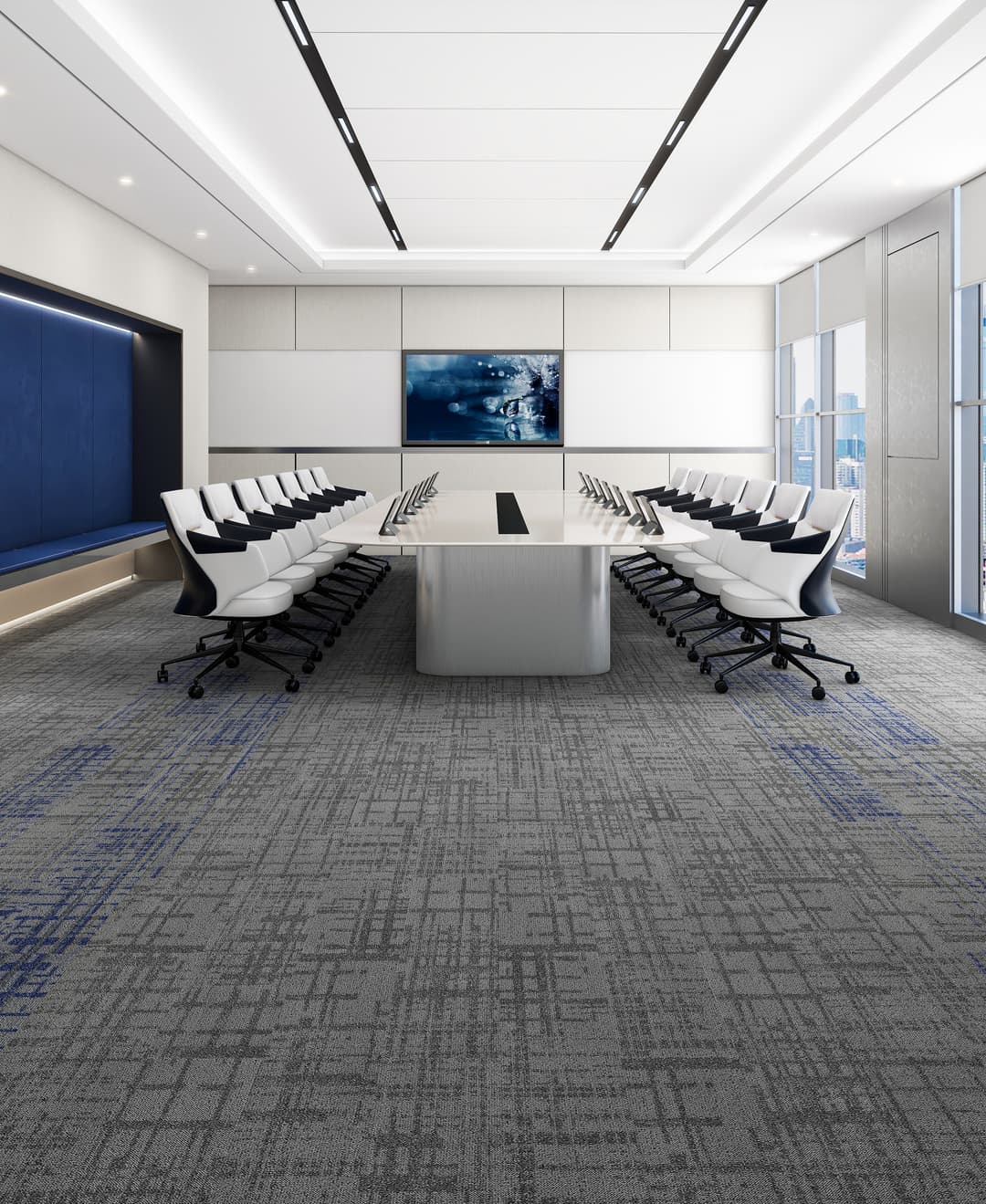
Two processes that can work together
If you want a flecked, varied floor, a space-dyed yarn can give colour changes along each strand. If you want a more pronounced yarn texture or blended strands, twist may play a larger visual role. The finished appearance also depends on fibre, pile construction and how the tiles are laid.
This distinction matters when a close-up photo looks lively but a whole floor appears too busy—or when a quiet swatch develops a clear direction across a corridor. Compare installed-size samples of actual products rather than treating the yarn label as the look.
What changes in the finished carpet tile?
| What to inspect | Space-dyed colour | Twisted yarn |
|---|---|---|
| At arm's length | Short or long colour sections can make each tuft look varied. | Multiple components may read as a mixed shade or a textured strand. |
| Across several tiles | Check whether colour zones form a repeat or an irregular field. | Check whether pile direction makes the surface look striped or shaded. |
| Under room lighting | Compare the strongest colour changes in daylight and artificial light. | Look for highlights and shadows created by the finished pile. |
| With adjacent finishes | Compare the yarn colours with walls, furniture and entry flooring. | Compare the texture with the visual quietness or movement the room needs. |
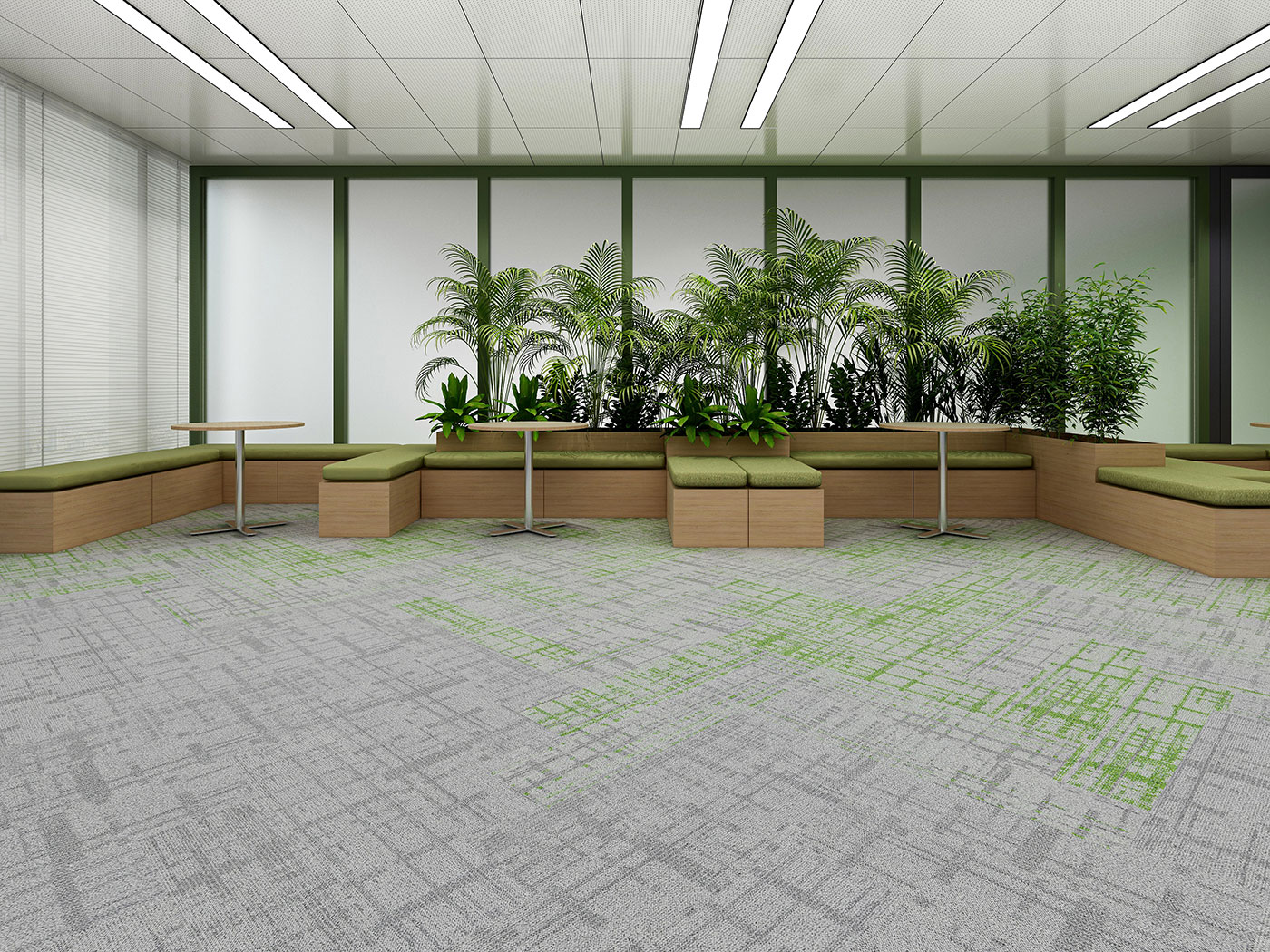
View the effect at room scale
Lay several full tiles on the floor in a method allowed for the exact product. A small swatch shows the yarn; a group of tiles shows the repeat, joints and directional effect. View it from the entrance and the normal working position.
For a calm office, try the candidate beside a neutral wall and actual furniture finish. For a route or feature zone, check whether the colour change gives enough movement without making signage or other interior patterns compete. Photograph the approved arrangement under the room's lighting.
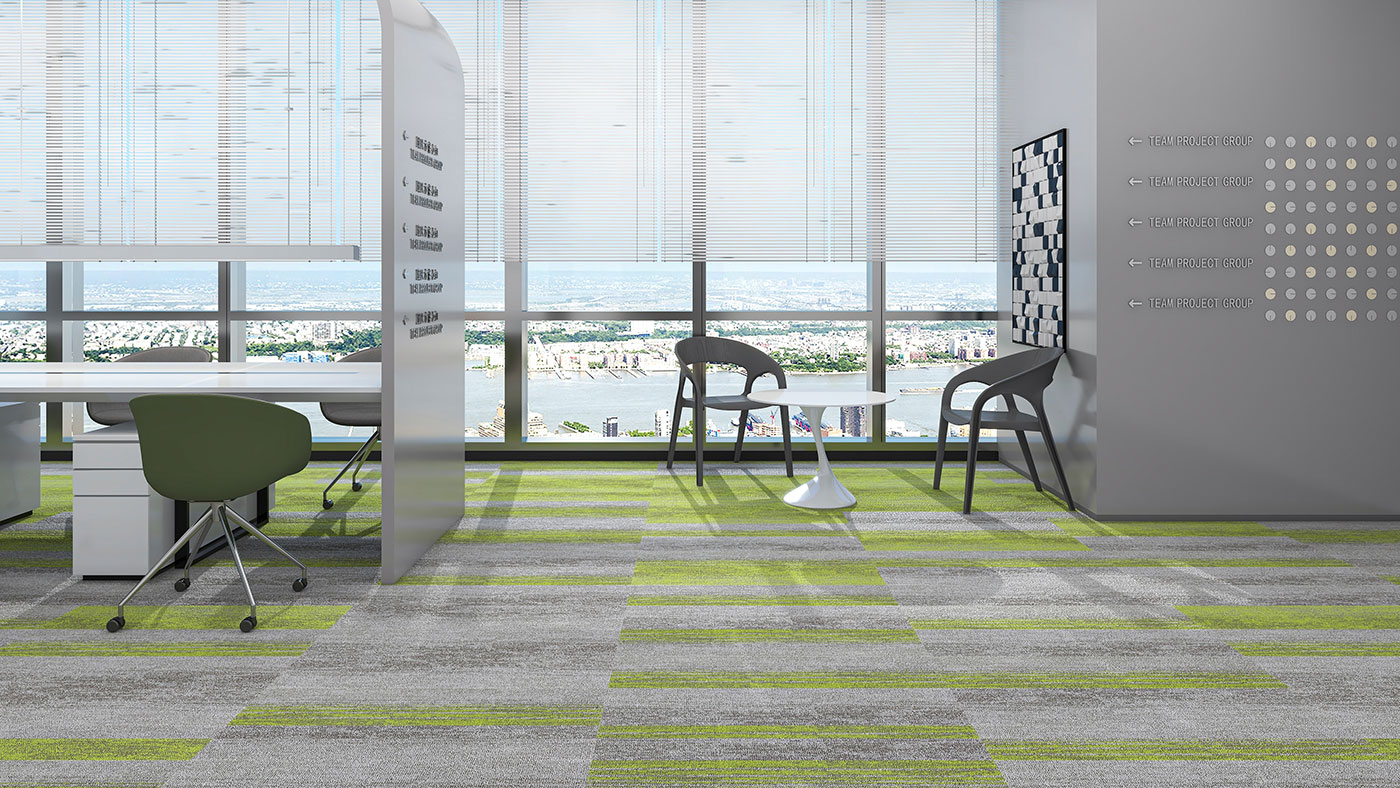
Choose a sample for your project
- Choose two or three actual colourways that fit the palette and obtain full tiles.
- Compare close-up yarn colour, surface texture and the appearance across multiple tiles.
- Check the product's permitted laying direction and view a floor group in the intended lighting.
- Keep the approved series, style, colour code and layout with the sample record; ask for its current product sheet when specifying.
Browse carpet tile collections · Compare carpet fibres · Ask for samples
Frequently asked questions
Is space-dyed yarn the opposite of twisted yarn?
No. Dye placement and yarn twist describe different processes. A manufacturer can use them together in one yarn.
Does space-dyed mean solution-dyed?
No. Space dyeing describes where colours are applied along a yarn. Solution dyeing colours fibre during manufacture. Check the exact product's dye-method field instead of treating the terms as synonyms.
Which looks better in an office?
It depends on the palette and the intended visual rhythm. Compare full carpet tiles in the room; look at them close up and across the whole zone.
Can a yarn term tell me how long the floor will last?
No. For use and care decisions, compare the full product construction, current product information and the conditions in the room.
Sources & further reading
- Superba — Space Dyeing for Carpet Yarns
- ISO 2061:2015 — Determination of Twist in Yarns
- Carpet and Rug Institute — Finding the Right Carpet
Figures attributed to other manufacturers are their own published values, quoted for context. Different laboratories, sample build-ups and substrates are not directly comparable.