



Carpet Tile Dimensional Stability: Read the Test Result
TL;DR
Dimensional stability describes how much a carpet tile changes size or distorts under specified test conditions. If you are comparing tiles for an office or other commercial floor, ask for the ISO 2551 result for the named product and backing, including specimen, method edition, direction and units. Then check the current installation guidance for the actual substrate and adhesive. This connects the laboratory result to the tile you plan to order and the floor you plan to build.
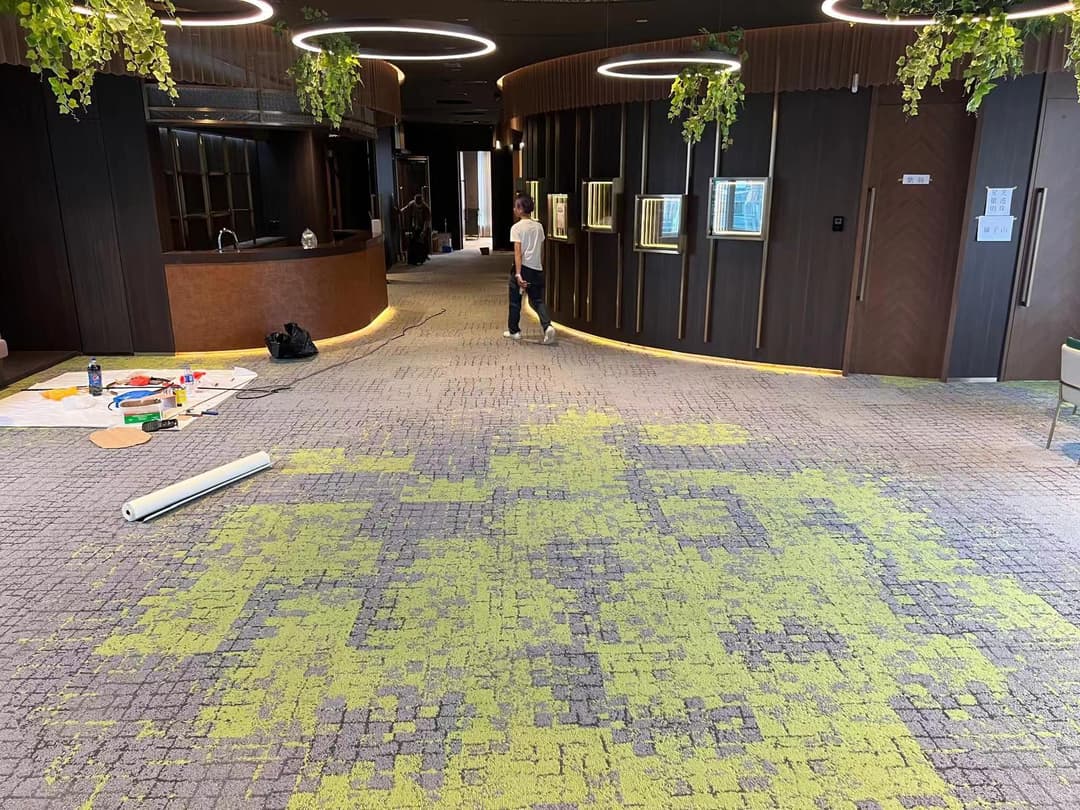
What dimensional stability means
A carpet tile needs to sit flat and keep joints consistent in service. Heat, water and installation conditions can affect its dimensions. ISO 2551:2020 specifies a procedure for measuring dimensional change and out-of-plane distortion of textile floor coverings under varied water and heat conditions. A report tells you how its stated specimen behaved in that test. Compare that record with the exact tile proposed for your project.
Read the product and test record
For example, if two 50 × 50 cm tiles have different backings, ask for the report covering each backing and the same measured property. Note the result, test direction, units and any criterion in the project specification. If one report names a different construction, request the matching record rather than comparing unlike specimens.
| Product identity | Series, style/code, colour, module size, construction and exact backing. |
|---|---|
| Test reference | Method number, edition, stated conditioning and deviations. |
| Specimen and result | Specimen description, direction, units, result and any stated limit. |
| Report currency | Report number, issue date and whether it covers the current item. |
| Installation interface | Current substrate, adhesive, acclimatisation and layout instructions for the exact item. |
| Project decision | Room conditions, transitions, mock-up questions and responsibility for approval. |
Connect the result to the site
Bring the product code, backing, report and room conditions to the installer. Together, review subfloor condition, adhesive, conditioning, layout and transitions. For a project with unusual moisture or temperature exposure, identify those conditions early so the right system guidance can be requested.
- Ask whether the report covers the proposed construction rather than a related product.
- Obtain current product-specific instructions for substrate preparation, adhesive, acclimatisation and installation.
- Put room conditions, transitions and unresolved site factors in the project review or mock-up record.
Frequently asked questions
Is dimensional stability the same as a backing name?
No. A backing name identifies part of a construction; dimensional stability needs its own product-specific evidence, method and scope.
Does ISO 2551 prove a carpet tile will not move on site?
No. ISO 2551 describes test methods for dimensional change and out-of-plane distortion under stated conditions. It does not by itself predict every substrate, adhesive, room or installation outcome.
What must match between a report and an order?
Match the series, style/code, colour where relevant, module, construction, backing, method, specimen, date and stated scope before relying on the report.
What should be reviewed separately from the report?
Review current product-specific substrate, adhesive, acclimatisation and installation instructions together with the actual project conditions.
Sources & further reading
- ISO 2551:2020 — Textile floor coverings and textile floor coverings in tile form
- Carpet and Rug Institute — Installation Standards
- CRI 104 — Standard for Installation of Commercial Carpet (2019)
- Interface Carpet Tile Installation Instructions, Rev. 27/04/23
- UNIJOY — product collections
Figures attributed to other manufacturers are their own published values, quoted for context. Different laboratories, sample build-ups and substrates are not directly comparable.