



How to Evaluate Carpet Tile Samples Before Buying
TL;DR
To evaluate a carpet tile sample, first match its style, colourway, size and backing to the product you have been quoted. View several full tiles together in the intended room, in its normal daylight and artificial light. Check the face, edges and backing for visible defects. Keep the approved sample and code with the order. A hand bend, water drop, sniff or quick rub cannot measure wear life, stain protection, fire rating or emissions; use current product documents for those questions.
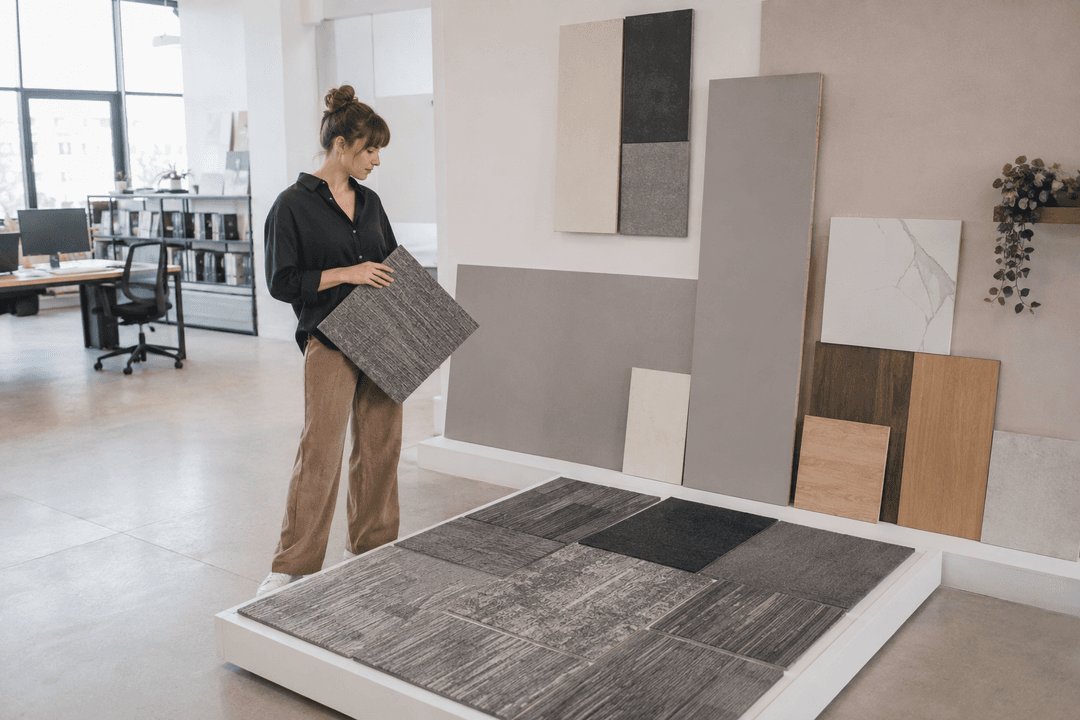
Start with the exact product
A sample is most useful when it represents the tile that will actually be ordered. Ask for the series, style/code, colourway, module size and backing on the sample label or accompanying record. If a supplier proposes a substitute, compare the substitute as a separate candidate rather than assuming the same look or construction.
What to look at on a full tile
| Colour and pattern | Place several tiles together. Look for the intended repeat, direction and variation under the light the room will use. |
|---|---|
| Surface and feel | Look and touch for the desired texture and pile character. Compare the full tile with nearby finishes, not just a screen image. |
| Edges and size | Look for obvious edge damage, distorted corners or contamination. Ask for the selected module size and planned layout. |
| Backing | Check that the supplied sample has the backing named in the quote. Note visible damage without folding or stressing the tile. |
| Identity | Photograph the sample label and keep its exact code, colour and any batch information with the finish schedule. |
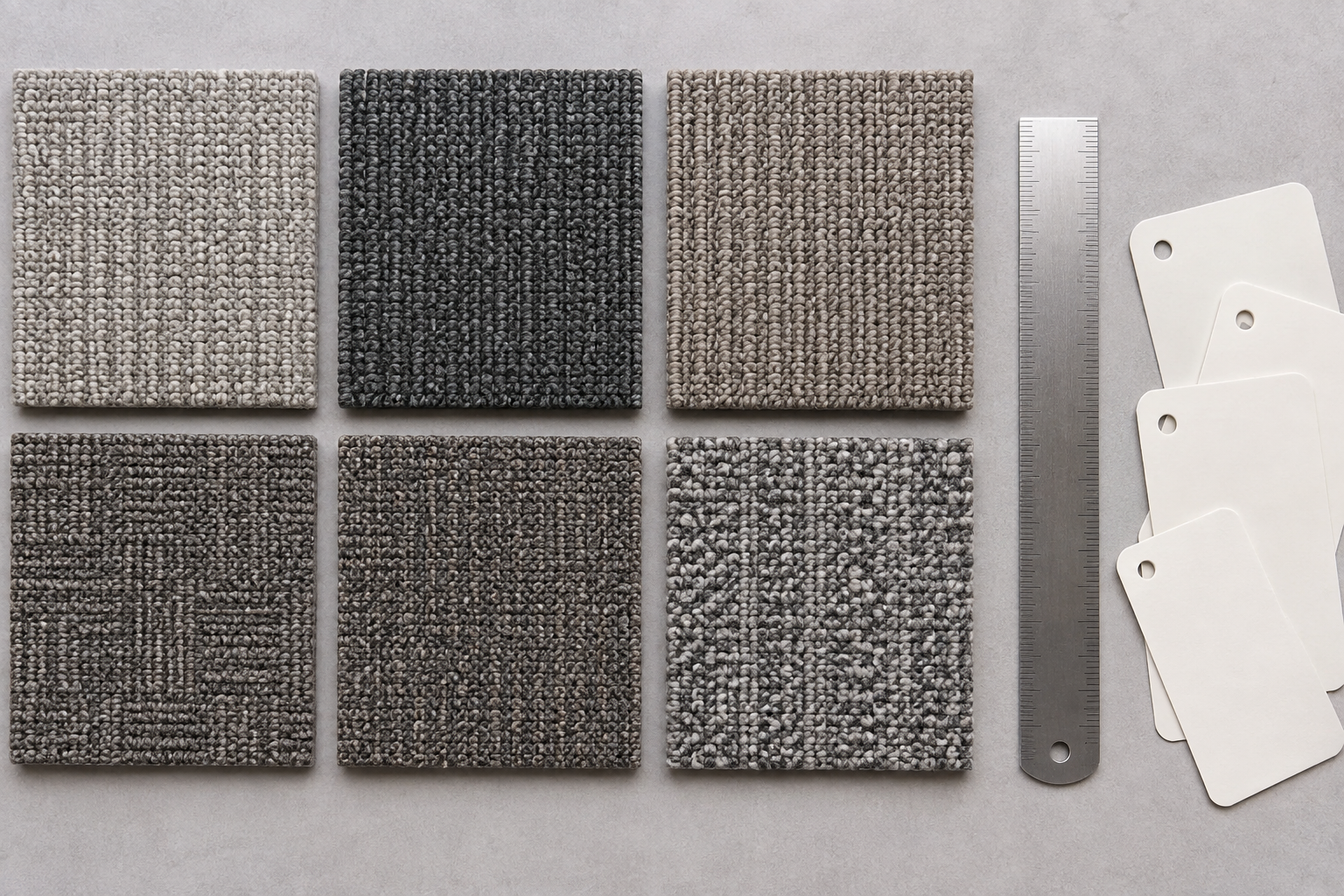
Try the sample in your room
Lay out multiple full tiles in the proposed direction, ideally beside paint, furniture and adjoining floor samples.
Look at them from the room entrance and under both daytime and evening lighting. A grey may read warmer or cooler next to other materials.
If the floor has several zones, review a tile set in each key area. Record the preferred direction and colourway before approving the finish.
What a sample cannot tell you
Do not fold a tile hard, scrape it with hook-and-loop or apply liquid unless the manufacturer specifically requests that procedure; those actions can damage a sample and are not standard performance tests.
A hand impression or the smell of a sample does not measure long-term wear, VOC emissions, stain resistance or fire classification. Ask for the current product-specific data or report required by the project.
The approved sample is a visual reference. Confirm the final order code, colour and backing in writing, then check delivered carton labels before installation.
Frequently asked questions
How many carpet tiles should I view before choosing?
Several full tiles show pattern direction and variation better than a small swatch. Ask for enough to review the proposed layout in the actual room.
Can I test carpet tile durability by folding or rubbing a sample?
No quick hand test predicts wear life. Avoid damaging the sample; use current product data and the relevant test results for the exact construction.
Can smell tell me whether a carpet tile is low VOC?
No. Odour is not an emissions measurement. Ask for the applicable current emissions documentation for the selected product.
What should I keep after approval?
Keep the labelled sample, exact code and colourway, backing, selected layout and the current documents used for the decision.
Sources & further reading
- Carpet and Rug Institute — Finding the Right Carpet
- Carpet and Rug Institute — Model Specification for Commercial Carpet
- Interface — Carpet Tile Product Inspection
Figures attributed to other manufacturers are their own published values, quoted for context. Different laboratories, sample build-ups and substrates are not directly comparable.