



Carpet Tile Colour Approval: Samples and Lighting
TL;DR
Approve carpet tile colour with a physical sample of the exact style and colourway in the room where it will be installed. View it in daylight and the project's artificial light, beside the actual wall, furniture and floor finishes. Record the product code, sample, light, location and layout direction so the order and installation follow the same decision.
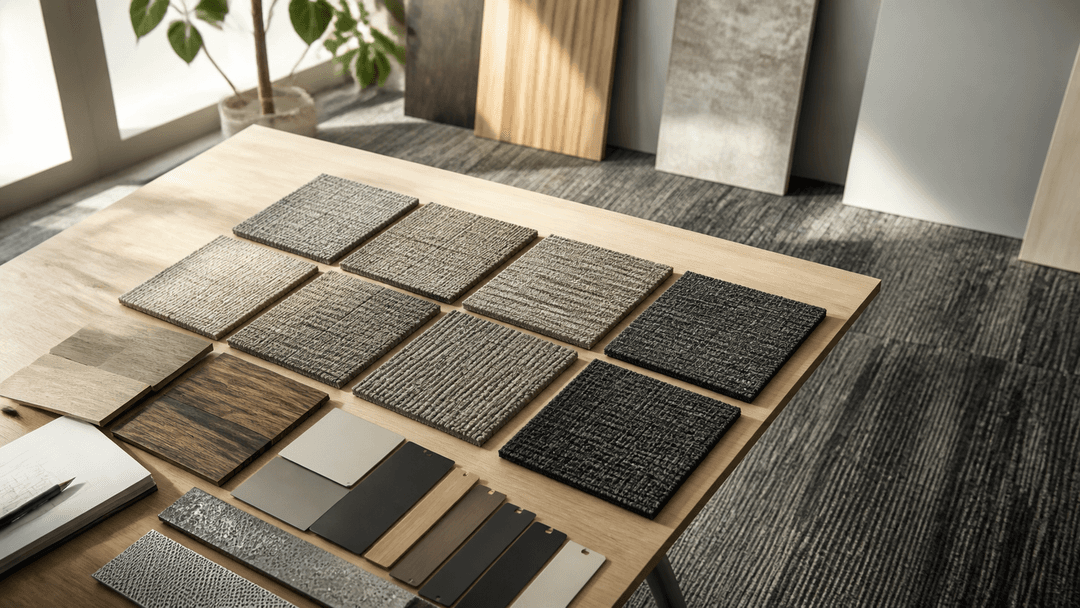
Start with the exact carpet tile sample
A screen image is useful for shortlisting, but it cannot reproduce the texture and colour changes caused by pile direction, room lighting and nearby materials. Request the exact product and colourway, then compare it in the intended space before placing an order.
Look at more than one tile when a design has variation. A small swatch may show only part of a large pattern; ask for a larger sample or a mock-up when joints, rotation or colour movement are important.
Commercial carpet colour should also be considered alongside traffic and soil. CRI notes that traffic, soil and the local environment influence appearance, especially around entrances. Choose the visual design with the maintenance plan in mind.
Check colour in the room
| Decision | Compare | Record |
|---|---|---|
| Product | Exact series, style, colourway and module size. | Codes on sample and proposed order. |
| Light | Daylight and operating artificial light at the intended location. | Viewing location, date and light conditions. |
| Nearby finishes | Walls, furniture, hard flooring and trims that touch the carpet. | Finish references or a sample-board photograph. |
| Layout | Tile direction, rotation, joints and transitions. | Approved pattern and orientation on a plan. |
| Visual range | Multiple tiles when the design varies across modules. | Accepted variation and retained reference sample. |
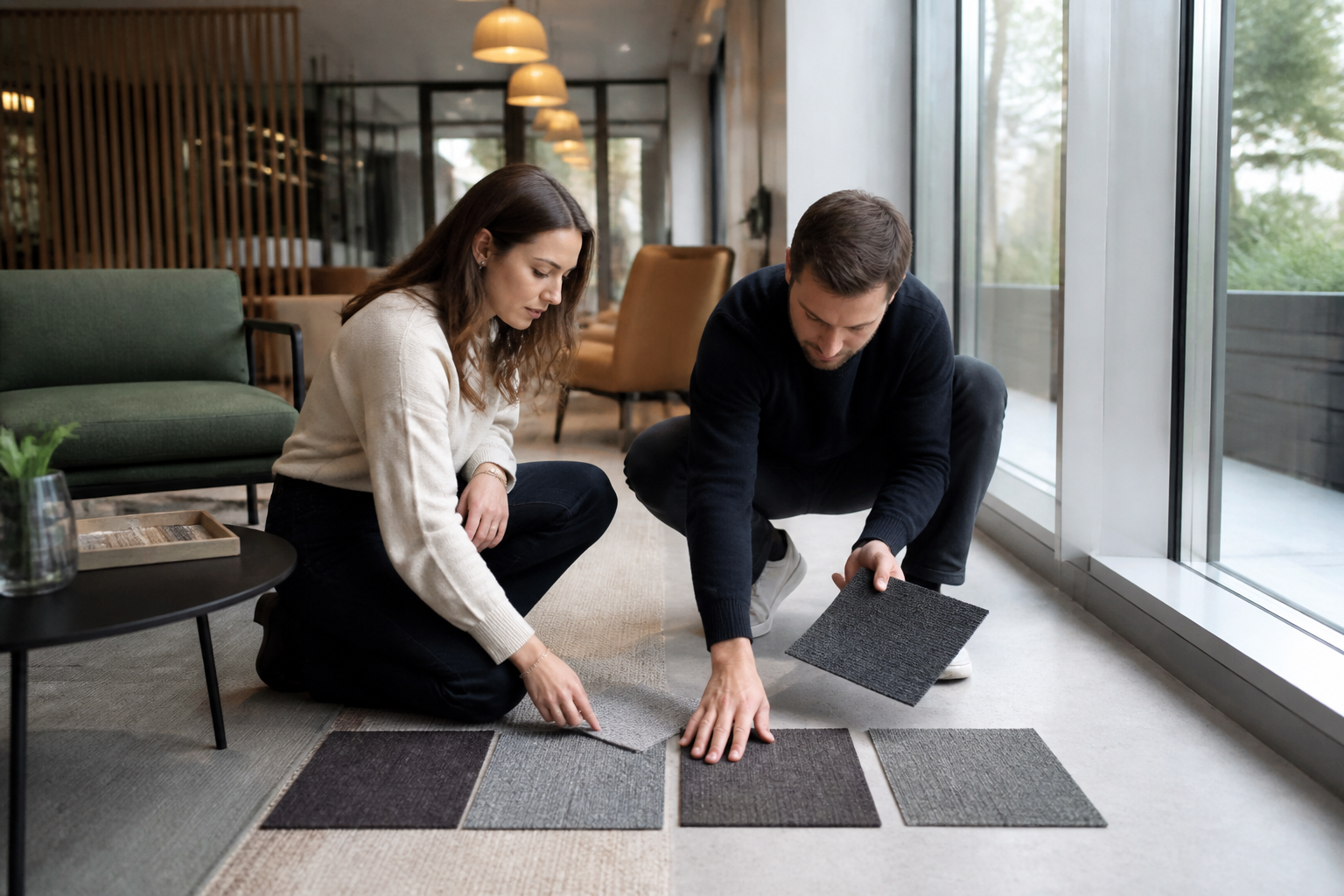
Place samples flat on the floor, not only upright against a wall. View them from the entrance and the main seated or standing positions.
Check the sample in the lighting used during normal operation. Warm and cool lamps can change how neutrals read; daylight can vary over the day.
Put the carpet next to actual adjacent finishes. A grey that works alone may feel blue, warm or flat beside a wall, timber, metal or upholstery.
Review the whole floor composition
Approve carpet tile colour with a physical sample of the exact style and colourway in the room where it will be installed. View it in daylight and the project's artificial light, beside the actual wall, furniture and floor finishes. Record the product code, sample, light, location and layout direction so the order and installation follow the same decision.
Record the approval
- Shortlist exact UNIJOY style and colourway codes and request physical samples.
- Review the sample in the intended room under daylight and artificial light.
- Compare neighbouring finishes and test the chosen tile direction or pattern.
- Record any requested change, then approve one code and one layout reference.
- Keep the signed sample reference with the purchase and installation documents.
Explore carpet tile collections · Review layout and pattern · Request colour samples
Frequently asked questions
Can I approve carpet tile colour from a screen?
Use a screen to shortlist. Make the final choice from a physical sample of the exact code in the intended light and beside the room's other finishes.
Why does the same carpet tile look different in another room?
Light source, daylight, pile direction, viewing angle and surrounding colours can change its appearance. Compare it in each important zone.
How many tiles should I review for a varied pattern?
Review enough modules to see the intended colour and pattern range; a larger sample or mock-up is useful when joints and rotation shape the design.
What should a colour approval record include?
Product and colourway codes, sample reference, viewing location and light, adjacent finishes, layout direction, decision date and approver.
Sources & further reading
- CIE 015:2018 — Colorimetry, 4th edition
- ASTM D1729-22 — Visual Appraisal of Colors
- ASTM D2244 — Color tolerances and color differences
- Shaw Contract — Commons Tile product page (peer documentation example)
- UNIJOY — product collections
Figures attributed to other manufacturers are their own published values, quoted for context. Different laboratories, sample build-ups and substrates are not directly comparable.