



Can Carpet Tiles Pattern Match? Layout and Samples
TL;DR
Some carpet tile designs are made to line up across modules, while others are deliberately varied or non-directional. There is no rule that all carpet tiles either match or cannot match. Check the exact product's permitted installation methods, lay several physical tiles in the proposed direction, and decide which joints or repeats are acceptable before ordering.
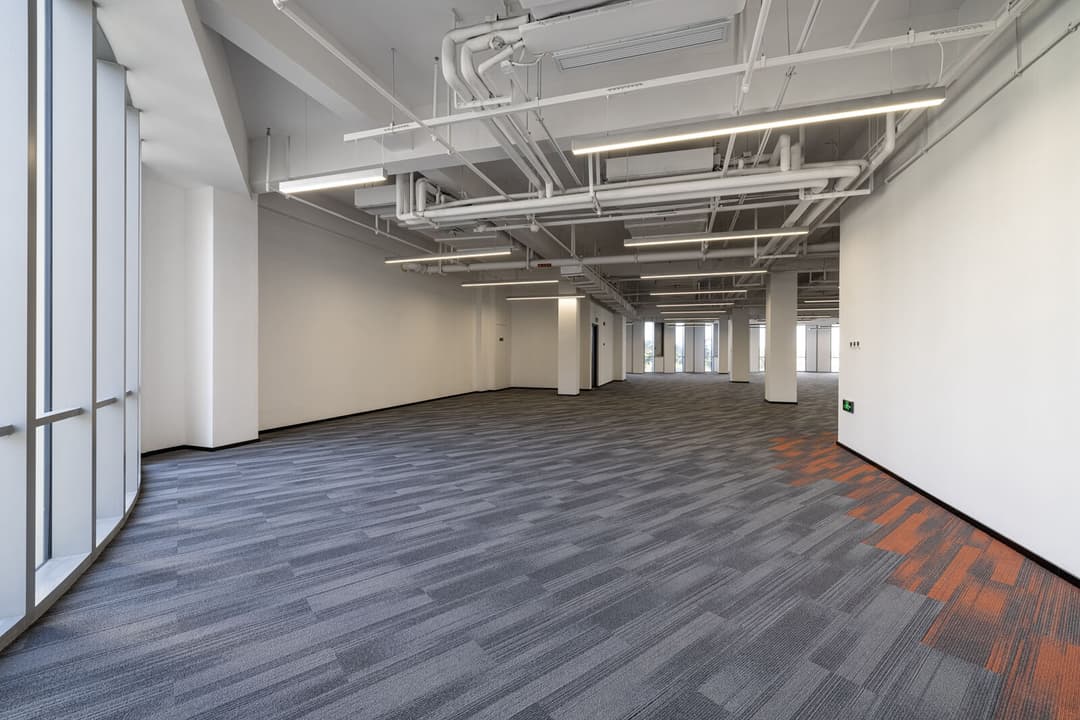
Decide what kind of pattern you want
Begin with the visual goal: a continuous graphic, a directional texture, a broken repeat or a blended field. A small swatch cannot show how a line crosses four modules or how a heathered design reads from the doorway. The product and its current guidance determine which layouts are available.
A printed image can help shortlist a design, but it cannot show pile direction and room lighting accurately. Ask for enough full tiles to test the question you actually need answered.
Choose a permitted layout
| Layout | What it may emphasize | Check before using |
|---|---|---|
| Monolithic | Arrows in one direction can make a linear design read as one field. | Whether the design is intended to align, and how joins appear between modules. |
| Quarter-turn | Adjacent tiles rotated 90° can make a visible checkerboard rhythm. | Whether the selected product permits rotation and whether the result suits the room. |
| Ashlar or brick | Staggered joins change the repeat and guide the eye along a route. | Which direction the arrows face and where cut rows land at walls and doors. |
| Non-directional | A varied field can make individual joins less central to the design. | Whether the product is designed for this method; arrows may still appear on the back. |
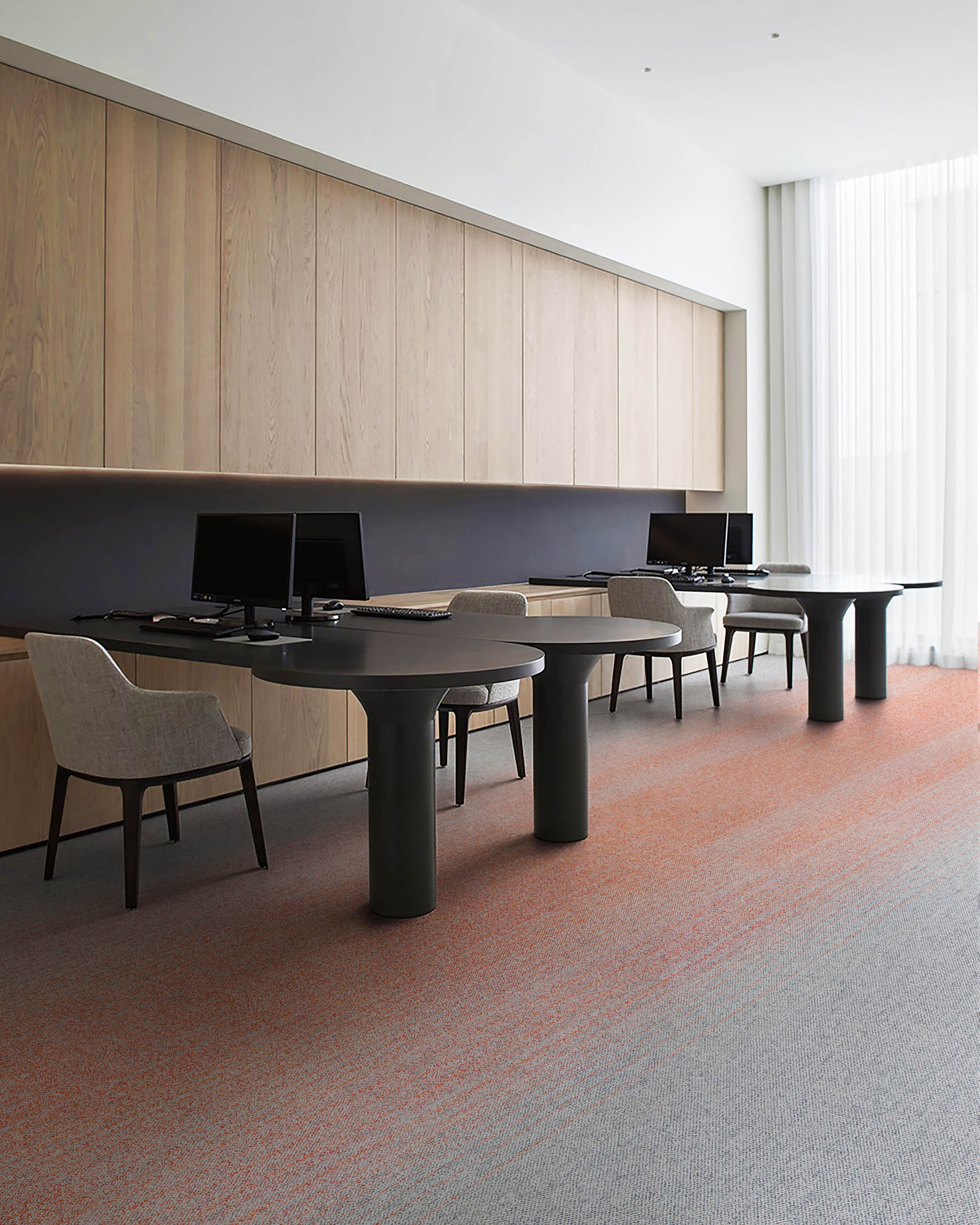
Test a group of real tiles
Lay a small grid of full tiles on the floor, not upright on a wall. Rotate or stagger only in ways the product allows. Look at the group from the normal entrance, seating position and under both daylight and the room's electric lights.
Where a continuous line or motif matters, inspect how it crosses joints, not just how one tile looks. Some products provide a matching repeat; others intentionally vary from tile to tile. Agree on the visual acceptance point with the designer and installer.
Keep the approved sample and note batch or lot information supplied with the order. A replacement tile installed years later may look newer than the surrounding floor, so plan spare stock and placement early.
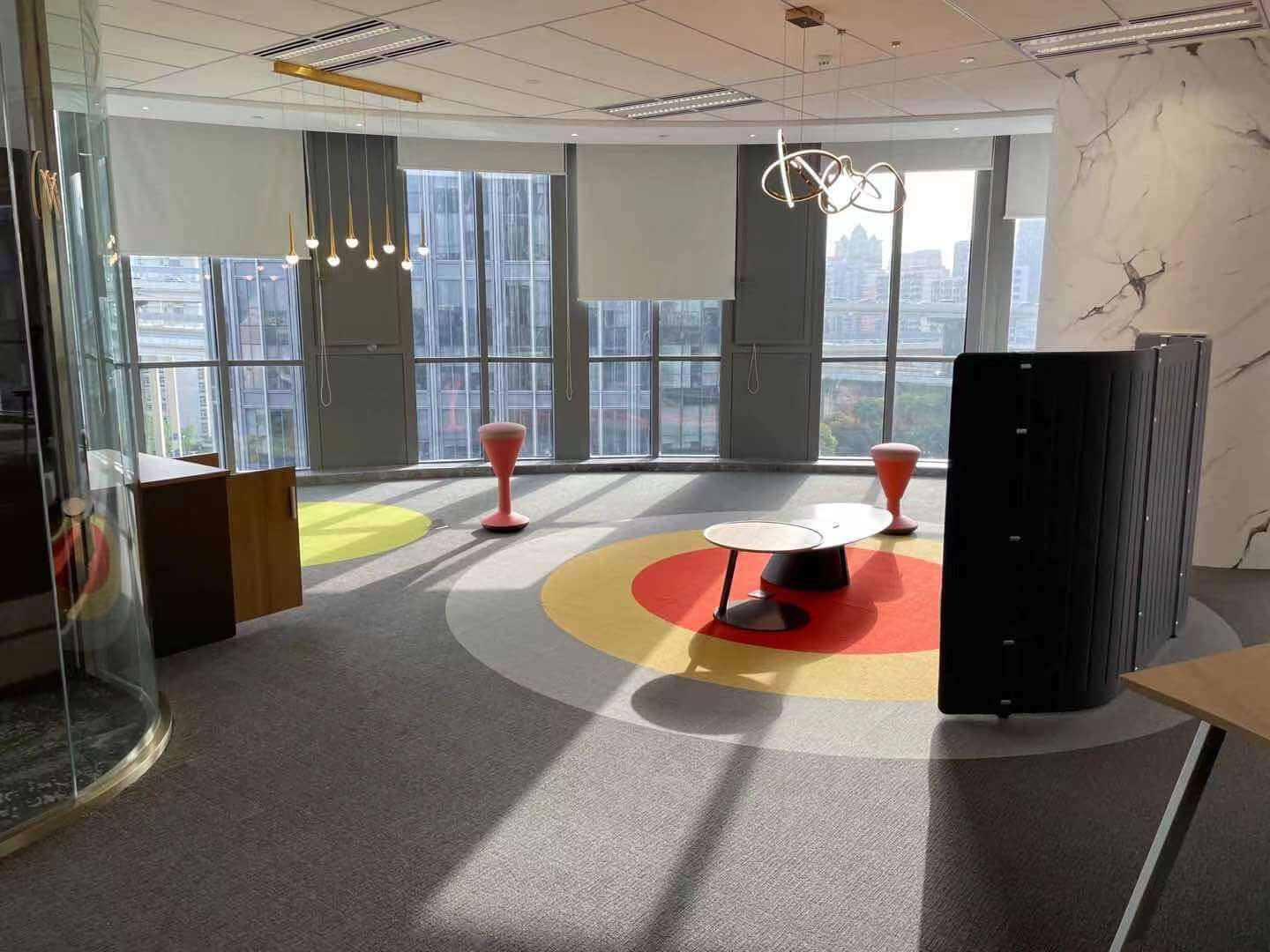
Record the installation drawing
- Identify the exact series, style, colourway, module size and sample used in the review.
- Mark the approved direction or rotation on the floor plan, including the starting point, borders and thresholds.
- Photograph the test group under the viewing conditions that matter to the project.
- Record where the design should align and where visual variation is accepted.
- Confirm the final layout against current product installation instructions before work starts.
Browse current collections · Explore layout patterns · Ask about a pattern
Frequently asked questions
Do all carpet tiles fail to pattern-match?
No. Some designs are engineered for alignment and others for variation. The exact product design, installation method and sample determine what to expect.
What does quarter-turn mean?
Adjacent tiles rotate 90 degrees. It can create a checkerboard effect, but only use it where the product's current instructions permit.
Can non-directional tiles ignore backing arrows?
Some products designed for non-directional installation allow it. Follow the exact product guidance rather than generalizing to all carpet tiles.
How do I approve a visible repeat?
Lay several full tiles in the proposed direction, view them under room lighting and record the accepted visual result with the layout drawing.
Sources & further reading
- Interface — Carpet Tile Installation Instructions
- Carpet and Rug Institute — Finding the Right Carpet
- Shaw Contract — pattern variation example
- UNIJOY — layout pattern resources
Figures attributed to other manufacturers are their own published values, quoted for context. Different laboratories, sample build-ups and substrates are not directly comparable.