



What Makes Carpet Tile Commercial Grade?
TL;DR
A commercial grade carpet tile is selected for a defined work or public space—not by one universal label. Start with the traffic, rolling loads, cleaning routine and visual brief for each zone. Then compare the exact tile's fibre, pile, backing, dimensions and installation method, using current product information and samples. A heavier or thicker tile is not automatically the better choice.

Start with the busiest part of the floor
An office can contain several very different floors. Reception catches outdoor soil; corridors carry frequent footsteps; desks see chair wheels; a meeting room may have lighter traffic but a stronger design brief. Describe those zones before you compare tile ranges.
Use-class systems such as ISO 10874 help organize the conversation about area and intensity of use. Ask what classification or tests a project actually requires, then connect that requirement to the exact product instead of treating 'commercial grade' as a guarantee.
Compare tiles that fit the same job
| Zone | What changes the choice | Useful sample check |
|---|---|---|
| Entrance and reception | Tracked soil, moisture, concentrated routes and adjacent hard flooring. | View the chosen colour beside the entry finish; plan soil control and cleanable edges. |
| Open office | Chair movement, desk clusters, circulation and future access. | Try the permitted tile layout and inspect a group under office lighting. |
| Corridor | Repeated traffic and directional sightlines. | Check the pattern along the route and the proposed replacement plan. |
| Meeting room | Design focus, furniture layout and occasional spills. | Compare the surface next to furniture and wall finishes. |
Check the floor as a complete system
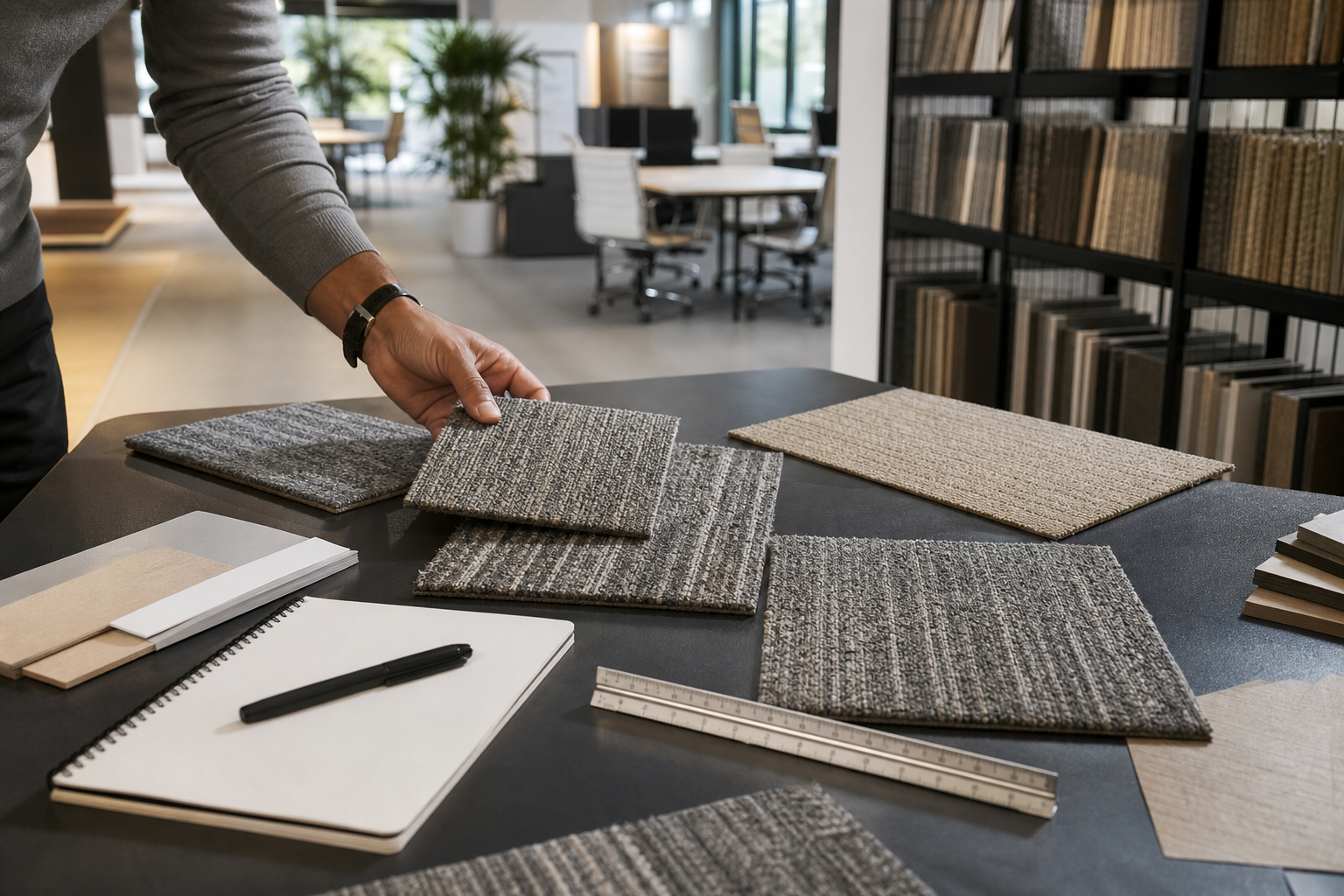
Put two or three named products side by side. Record the series, style, colourway and module so every sample links to a real catalogue entry. Compare fibre and pile construction for the intended use, backing and tile size for the chosen installation, and current care instructions for the facilities team.
Weight and thickness are useful fields when they are defined consistently. Pile weight is different from total product weight; pile height is different from total thickness. Check each field's unit and construction before reading a larger number as 'stronger'. A current product sheet is more useful than a broad grade label.
Make a practical shortlist
- Mark traffic, wheeled use, moisture and cleaning access on the room plan.
- Select two or three actual tile styles and colourways; compare full tiles in the intended light.
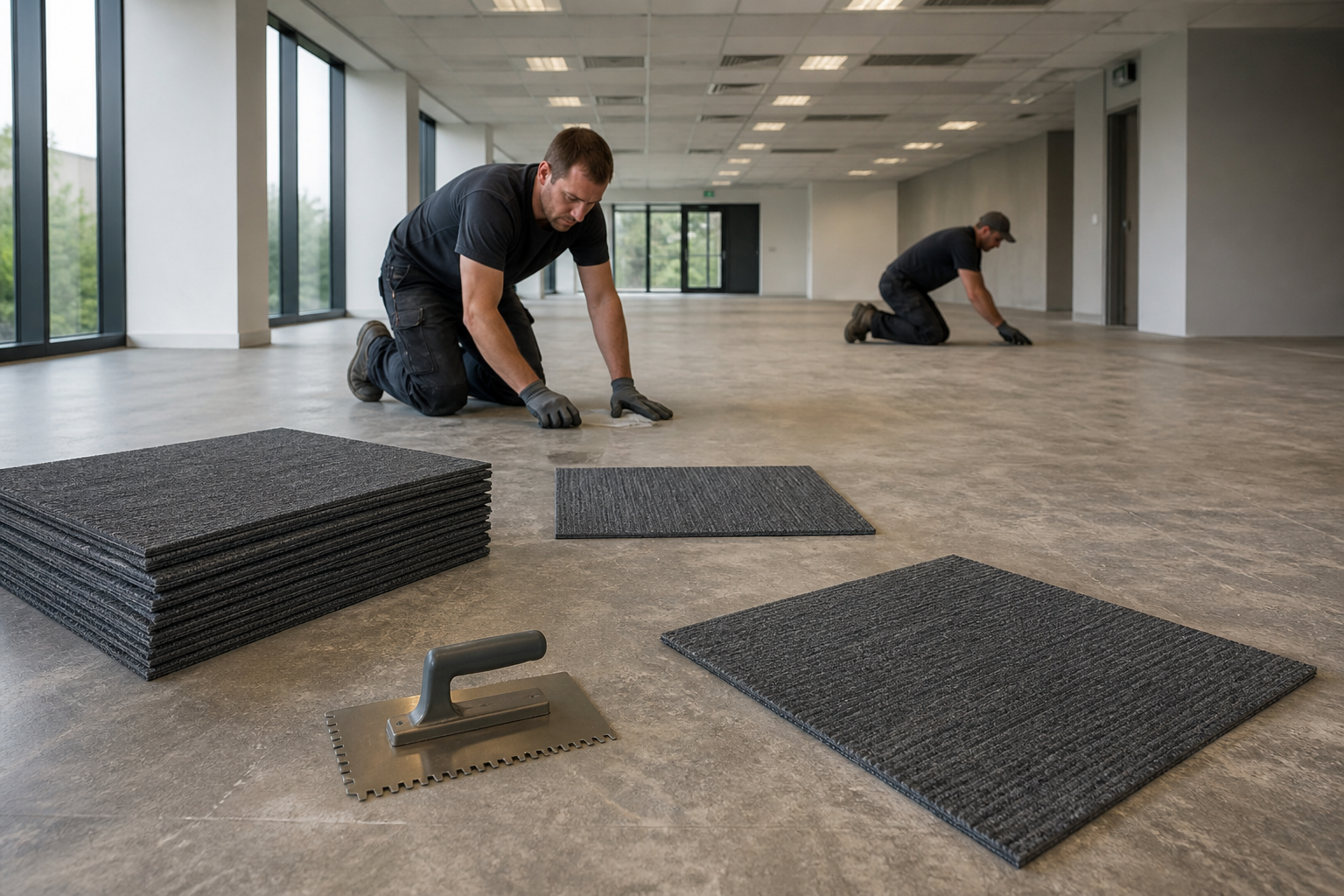
- Review the backing, module, permitted layout and existing subfloor with the installer.
- Match any required use class, fire or emissions document to the exact product and project jurisdiction.
- Keep the chosen code, sample, quantity, spare stock and cleaning instructions with the finish schedule.
Browse carpet tiles · Read the specification sheet guide · Discuss a project
Frequently asked questions
Is 'commercial grade' a single carpet tile rating?
No. It is a broad market term. A project may specify a use class or particular tests, but the exact tile and intended zone are what you should compare.
Does a heavier tile last longer?
Not by weight alone. Fibre, pile construction, backing, traffic, installation and care all shape how the floor performs in use.
Should every office zone use the same tile?
Not necessarily. A coordinated palette can use different constructions or colours where entrance soil, chair movement and design priorities differ.
What should I send when asking for a quote?
Send the room plan, approximate area, product code and colourway, proposed installation and document requirements. This makes sample and price comparisons more useful.
Sources & further reading
- ISO 10874:2009 — Classification of Floor Coverings
- Carpet and Rug Institute — Model Specification for Commercial Carpet
- Carpet and Rug Institute — Finding the Right Carpet
- Carpet and Rug Institute — CRI 104 Installation Standard
Figures attributed to other manufacturers are their own published values, quoted for context. Different laboratories, sample build-ups and substrates are not directly comparable.