



Loop Pile vs Cut Pile Carpet Tiles for Offices
TL;DR
Loop pile keeps the yarn in loops and often gives an even, textured surface. Cut pile has cut yarn ends and can give a softer, more plush look. A low, dense loop tile is a common choice for busy circulation and rolling traffic, while cut or cut-and-loop styles may suit offices or meeting rooms seeking a different feel. The pile label alone does not determine service life: compare the exact fibre, pile height, density, backing, intended-use data and maintenance for each tile.
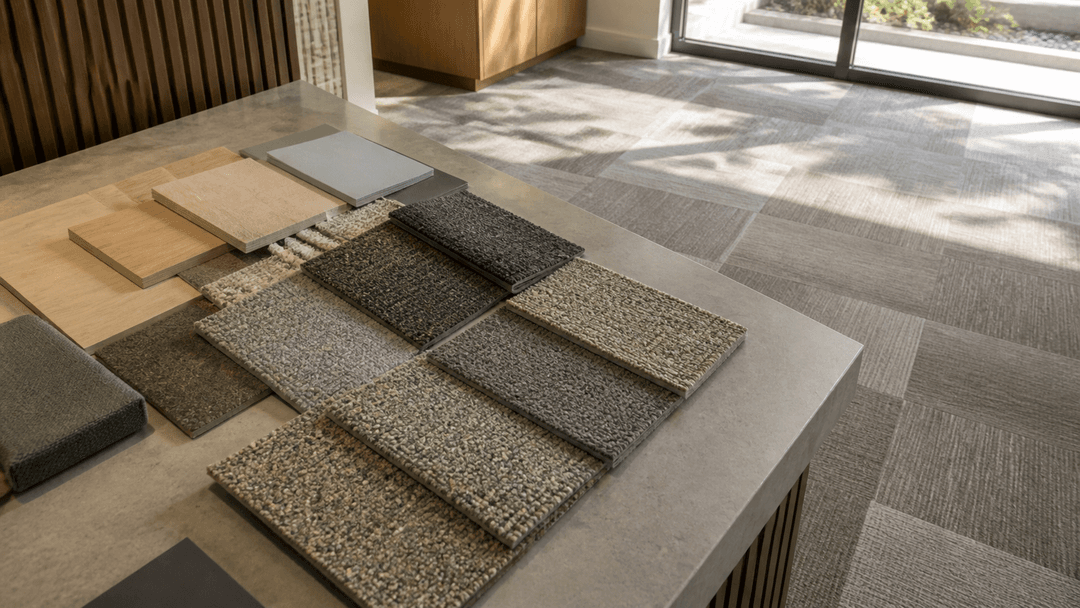
How loop and cut pile look
Both are tufted carpet constructions. In loop pile, yarn loops remain intact. In cut pile, loops are sheared to make exposed yarn ends. Mixed cut-and-loop designs use both to create a pattern. These construction names tell you something about appearance and feel, but two products with the same pile type can differ greatly in fibre, twist, height, backing and performance.
Compare the actual carpet tiles
| Surface look | Textured or linear; often visually even | Softer or more plush; can show shade and direction differently |
|---|---|---|
| Feel | Typically firmer at a similar low pile height | Often softer to touch, depending on fibre and density |
| High-traffic question | Ask whether the exact low, dense tile suits the route and rolling use | Ask for the exact construction and intended-use result; cut pile is not automatically unsuitable |
| Care | Check how the texture hides or shows soil and the current cleaning guide | Check vacuuming and appearance changes under the proposed use |
| Product record | Record fibre, pile height, backing and layout direction | Record the same fields and compare full tile samples |

Choose by office zone
Reception and corridors: start with the traffic, tracked-in soil and rolling loads. Low, dense loop styles are often considered, but confirm the named product and care plan.
Workstations: compare chair movement, replacement access and visible texture. Review several full tiles, not just a small swatch.
Meeting and private rooms: appearance and underfoot feel may carry more weight. Cut, cut-and-loop or loop styles can all be candidates if their exact constructions fit the room.
Ask for samples before deciding
- Select the room and traffic pattern before a pile type.
- Put named loop and cut candidates side by side with exact product codes.
- Compare fibre, pile height, face construction, backing and intended-use documents.
- View multiple tiles in the planned light and installation direction.
- Check cleaning instructions, spare-stock plan and like-for-like quotes.
Frequently asked questions
Is loop pile always more durable than cut pile?
No. Low, dense loop products often work well in busy circulation, but fibre, twist, density, backing and the actual product result matter. Some cut piles also suit substantial traffic.
Is cut pile too soft for a commercial office?
Not inherently. Compare a named product's construction, intended use and care with the specific room.
What is cut-and-loop carpet?
It combines cut yarn ends and intact loops to create surface pattern and texture.
What should I request from a supplier?
Ask for full tile samples, exact codes, construction and backing details, current product data and care instructions.
Sources & further reading
- Carpet and Rug Institute — Finding the Right Carpet
- Carpet and Rug Institute — Facility-Specific Considerations
- Carpet and Rug Institute — Model Specification for Commercial Carpet
Figures attributed to other manufacturers are their own published values, quoted for context. Different laboratories, sample build-ups and substrates are not directly comparable.