



How to Vet a Chinese Carpet Tile Manufacturer
TL;DR
Vet a Chinese carpet-tile manufacturer against the exact construction you plan to buy, not against a catalogue or a factory-tour photo. Six checks do most of the work: confirm you are dealing with the actual factory and that the legal entity on the licence, the certificates and the bank account all match; get every test report tied to the specific tile, not a sister product; control the golden sample against bulk and pin the dye lot; separate stock MOQ from custom (custom carries a real minimum); read lead time and ocean freight as one delivery date; and understand where your Incoterm moves risk. For reference, UNIJOY's own answers: no MOQ on stock (order a single box), 300 m² for custom colour or pattern; three weeks ex-works, two when expedited; free samples in about five days; T/T with FOB or CIF; and a 15-year nylon warranty against manufacturing defects.
1. Start with the exact tile, not the factory story
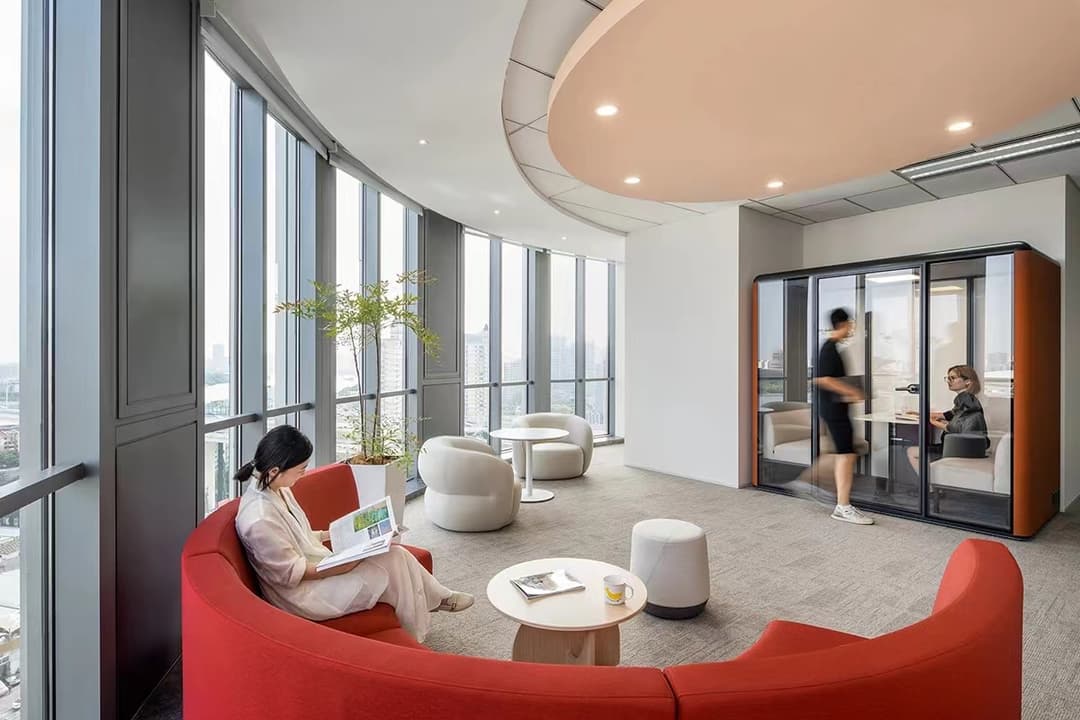
The first question in sourcing carpet tile from China is not whether a supplier has a big catalogue or a smart showroom. It is whether they can pin down the exact construction going onto your floor — the fibre, the pile, the backing, the tile format and the colourway — and make every document, sample and lead-time promise refer back to it.
Almost every mistake in this trade traces back to a claim that floats free of a specific tile.“We're certified,” “we meet the standard,” “15-year warranty” — each is meaningless until it is attached to the SKU on your quotation. So the checklist below is really one idea applied six ways: tie the claim to the tile.
2. Factory or trader — and does the entity match?
A large share of "manufacturers" in online directories are trading companies placing your order with an unnamed mill. That is not automatically a problem — some traders add real value — but you need to know which you are dealing with, because it changes who controls quality and who stands behind the warranty.
- Business scope. The licence should list manufacturing, not only wholesale or trade. Ask to see the production site — a video walk-through at minimum.
- Entity match. The company name on the business licence, on the test certificates, and on the proforma invoice should be the same legal entity. A certificate held by a parent, a trading arm or a mill the supplier buys from is not automatically a certificate for your goods.
- Payment destination. Funds should go to the company's account, in the company's registered name — never a personal or third-party account. This one check catches a large fraction of fraud.
The entity-match test is the highest-value minute you will spend. Put the licence, the certificate and the invoice side by side and read the registered name on each. If they differ, ask why before you do anything else.
3. Make the test report do the work
A supplier "having a certificate" proves very little. A certificate is only valid for the specific article that was tested — same fibre, same face weight, same backing, same construction. Ask for the report, then confirm the sample it describes matches your tile. Here is what to request and what each document actually proves:
| Document | What it proves | What to check |
|---|---|---|
| CRI Green Label Plus | Low indoor-air VOC emissions, chamber-tested to California Section 01350 | The label ID resolves in CRI's database and the category matches your construction |
| GB 18587 | China's mandatory limit on harmful substances from carpet, cushion & adhesive | Current issue; applies to carpet tile, not a different product |
| EN 1307 | Use-class classification by wear & long-term appearance retention | The class matches your traffic level (general/heavy commercial) |
| Fire — EN 13501-1 (Bfl-s1) | Reaction-to-fire class; Bfl needs critical heat flux ≥ 8.0 kW/m², s1 = lowest smoke | The tested build-up (including backing) matches what you are buying |
| Fire — ASTM E648 | Critical radiant flux for floor coverings (US / NFPA 253 equivalent) | Class and value suit the occupancy your project specifies |
| ISO 105-X12 | Colourfastness to rubbing | Cited by its specific part, with a result — not a bare "ISO 105" |
You will not need all of these on every project — but you should decide which ones matter and insist each names the construction you are ordering. Our companion guides go deeper on reading an emissions certificate and on what a Chinese standard claim does and doesn't prove.
4. Golden sample, bulk and dye lot
Carpet tile shows shading and streaking across dye lots more than most buyers expect. Two things protect you:
- A signed golden sample. Approve a physical sample and have it referenced on the order, so bulk can be held against it rather than against a screen image.
- Single-lot production and a pre-shipment check. Ask that one order runs from a single dye lot where possible, and that a pre-shipment inspection confirms bulk matches the approved sample. Pressure to skip samples or rush the contract is itself a red flag.
5. The commercial terms that hide surprises
Three commercial questions cause most of the late, awkward surprises. Settle them in writing before you compare prices.
| Question | Why it prevents surprises |
|---|---|
| Stock or custom? | It changes the MOQ, the colour availability and the manufacturing time. Custom colour or pattern carries a real minimum; stock usually does not. |
| Ex works or delivered? | A quoted "lead time" is often production only. Freight, customs and final delivery sit on top — and that is where weeks disappear. |
| Which Incoterm? | FOB and CIF allocate freight, insurance and — crucially — risk differently. See the diagram below. |
6. Where your Incoterm moves the risk
The Incoterm is not just about who books the ship. It sets where the risk of the goods passes from seller to buyer — and under CIF that point is not where most buyers assume.
7. One factory's answers, in full
A checklist is easier to use with a worked example. Here are our own answers to the questions above — not as a sales pitch, but so you have a concrete baseline to hold other suppliers to:
| Question | UNIJOY's answer |
|---|---|
| MOQ — stock | None. A project can order a single box. |
| MOQ — custom | 300 m² for bespoke pattern, colour or size. |
| Lead time | Three weeks ex works; two weeks expedited. Excludes international shipping. |
| Samples | Free; about five days to prepare, then transit by destination. |
| Payment / terms | T/T; FOB or CIF. |
| Warranty | 15 years on nylon, against manufacturing defects (wear, edge fraying, delamination, shrinkage, elongation, cupping, static). |
Whether or not you buy from us, use these as reference points. A supplier who can answer each line this specifically — and back the warranty and test claims with documents tied to your exact tile — has passed the only due diligence that matters. One who cannot is asking you to take the story on trust.
Frequently asked questions
Is there a minimum order quantity?
It depends entirely on stock versus custom, and any honest supplier will split the two. For UNIJOY stock products there is no minimum — a project can order a single box. Bespoke pattern, colour or size production starts at 300 m². A supplier who quotes one blanket MOQ for everything is hiding that distinction.
How long does supply take?
For UNIJOY, stock supply is three weeks ex works, or two weeks when expedited — both excluding international shipping, which depends on destination and freight mode. The number that matters to your site is production plus the ocean leg; ask for both, not just the quicker one.
Are samples charged, and how fast can they arrive?
UNIJOY samples are free and normally take about five days to prepare; transit then depends on destination. Treat a physical sample as non-negotiable: it is the reference you will hold bulk against, so any pressure to skip it is itself a warning sign.
Which payment and trade terms are available?
UNIJOY works on T/T payment and quotes FOB or CIF. The choice is not just about who books the ship — under CIF the seller pays freight and insurance to the destination port, but the risk of the voyage has already passed to you at loading. FOB gives you control of freight and your own insurance from the origin port.
What does the warranty actually cover?
UNIJOY's nylon warranty runs to 15 years and covers surface problems arising from manufacturing defects — excessive wear, edge fraying, backing delamination, shrinkage, elongation, cupping and static. Read the scope carefully: a manufacturing-defect warranty is not a promise that appearance stays unchanged for 15 years regardless of traffic or maintenance. That distinction is normal across the industry; the honest version states it plainly.
How do I know I'm dealing with the factory and not a trading company?
Check that the business scope on the licence includes manufacturing, that the company name on the licence matches the certificates and the proforma invoice, and that payment goes to the company account rather than a personal or third-party one. Ask to see the production site. A mismatch between the entity on the certificate and the entity invoicing you is the single most common red flag when sourcing from China.
Sources & further reading
- ICC — Incoterms 2020 rules (official overview)
- The Carpet and Rug Institute — Green Label Plus (emissions certification)
- Measurlabs — EN 13501-1 reaction-to-fire classification for floorings
- Intertek — ASTM E648 critical radiant flux for floor coverings
- UNIJOY — contact, commercial FAQ and enquiry form
- UNIJOY — technical documents, certificates and test reports
Figures attributed to other manufacturers are their own published values, quoted for context. Different laboratories, sample build-ups and substrates are not directly comparable.