



Carpet Tile Backing Systems: Compare the Whole Floor Assembly
TL;DR
Choose a carpet tile backing as part of a complete floor assembly. First fix the exact product code and published backing, then coordinate the substrate, approved adhesive or fixation method, finished height, door and access-panel details, and replacement plan. UNIJOY’s current catalogue publishes TGDURA Bac®, TGFLEX® Bac and TGLITE® Bac on different codes; the name alone does not establish project performance. Compare like-for-like samples and current technical documents for the shortlisted code.

Read the complete construction
Start with the product code, not a generic backing category. A commercial carpet tile is a layered assembly: the yarn and tufted face sit above a primary support; stabilising and lower layers hold the module together and form the interface with the floor. The construction supplied for one code may differ from another, so the current code-specific record is the correct comparison point.
UNIJOY’s live catalogue currently shows TGDURA Bac®, TGFLEX® Bac and TGLITE® Bac. For example, Ancient 55905 publishes TGDURA Bac®, Surge 21902 publishes TGFLEX® Bac, and Rhythm Flow 51902 publishes TGLITE® Bac. These records identify the available construction; project suitability still comes from coordinating the complete floor detail.
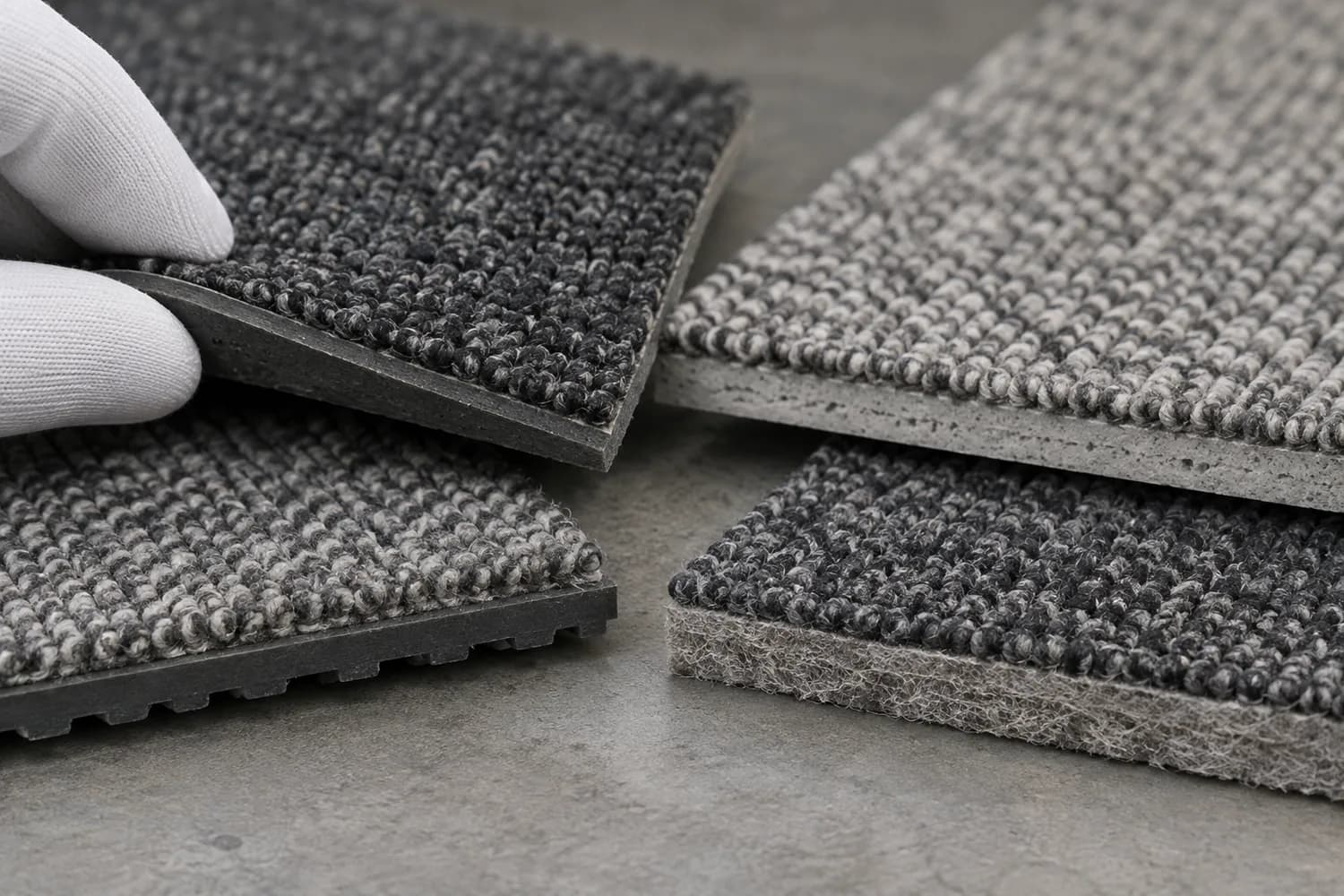
Ancient 55905 · Surge 21902 · Rhythm Flow 51902
Match backing to three site conditions
On ordinary concrete, record moisture and surface-preparation findings, the approved fixation system, perimeter details and transition heights. A backing cannot compensate for a substrate that is weak, contaminated or outside the installation requirements.
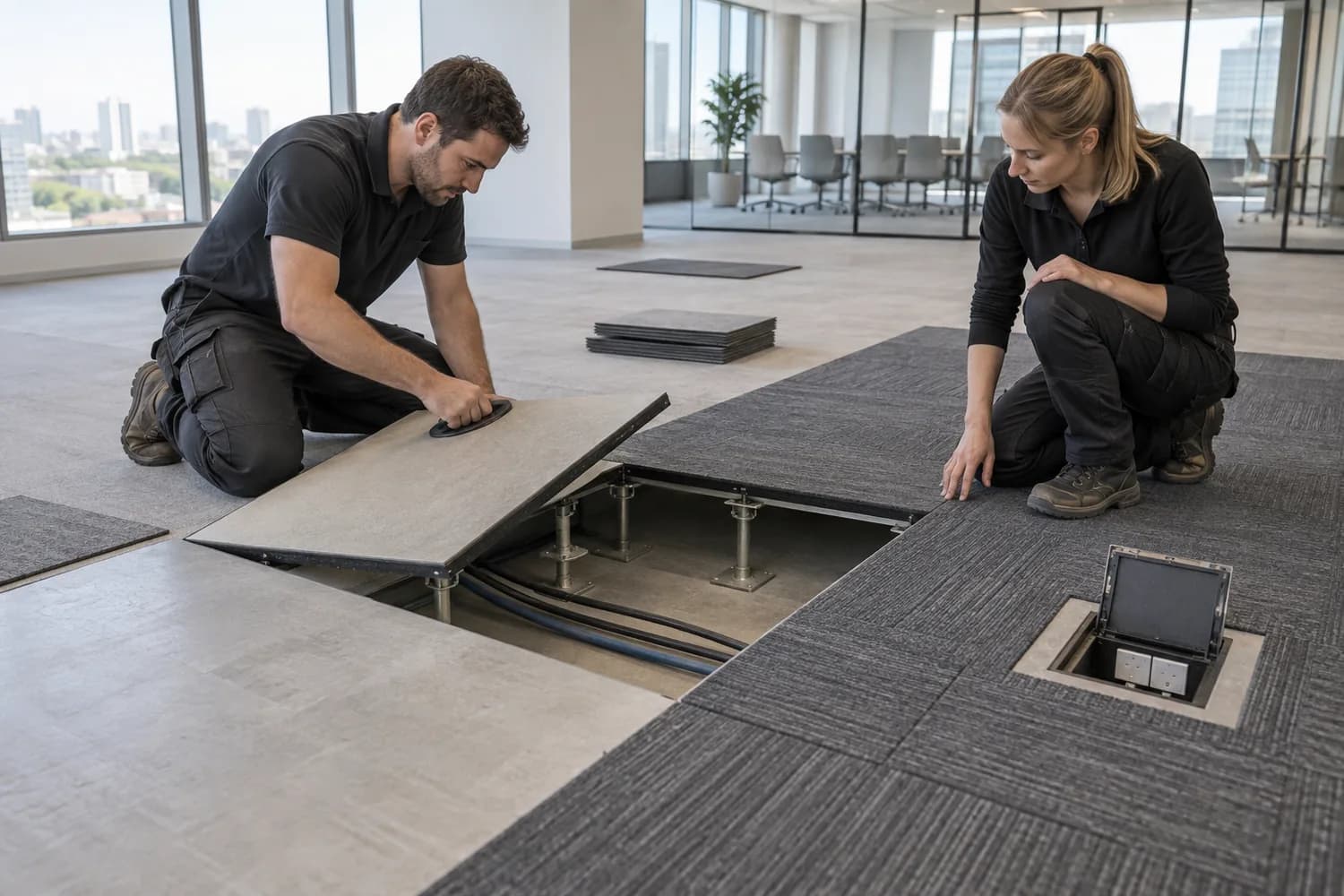
On raised access floors, coordinate the carpet module with panel joints, floor boxes and the access route. The approved method should let the facilities team reach panels and replace a damaged tile without turning a small repair into a larger floor disturbance.
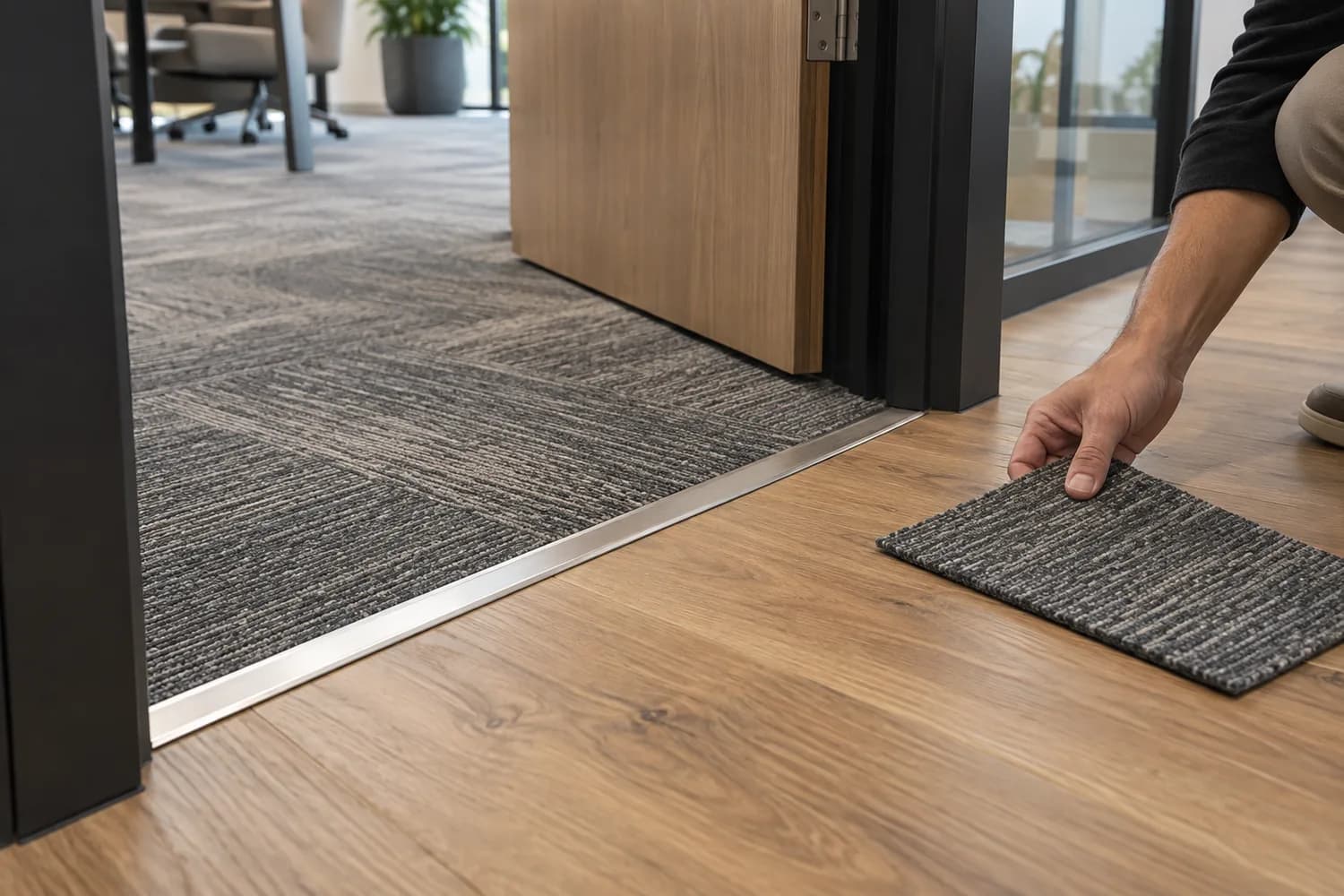
At doors and hard-floor junctions, compare actual samples at the intended transition. The critical result is the installed finished level, door clearance and secure edge—not the backing label in isolation.
Compare fields, not names
Use the same fields for every shortlisted code. If one proposal names only a backing while another supplies product code, build-up, thickness, substrate and installation documents, the two offers are not yet comparable.
Ask for the current product sheet and installation guidance tied to the exact code. Add the physical sample, proposed fixation material, substrate note and transition detail to one approval package.
| Field | Confirm for the exact code | Project decision |
|---|---|---|
| Layered construction | Face, primary support, stabilising and lower layers shown in current documents | Keep the whole build-up attached to the product code |
| Substrate | Concrete, raised access panel or other prepared base | Preparation and compatible fixation |
| Installation interface | Current permitted adhesive or release/fixation method | Access, replacement and perimeter restraint |
| Finished height | Physical sample plus published total-thickness field | Door clearance, transition and floor-box operation |
| Documents | Product sheet, installation guidance and relevant test records | One approval pack with revision/date |
| Replacement | Colour/code identity, laying direction and spare stock | Future local replacement without visual mismatch |
Approve samples and documents
Place full-size samples on the project substrate or a representative mock-up. Check flatness, edge behaviour, removal and reinstatement, floor-box operation and the appearance of transitions. Record who approved the product code, backing and method.
Keep the approved sample and document revision with the RFQ. If the code changes, repeat the check because the published backing and finished height may also change.
Write a quote-ready backing brief
A quote-ready brief names the room or zone, exact series and code, colour, tile size, published backing, substrate, intended method, transition locations, access-floor requirements, technical documents, sample approval and spare-stock quantity.
Send the marked plan with the RFQ, then ask the supplier to return the same fields in the quotation. That creates a direct path from product browsing to sample review, technical confirmation and order.
Browse current carpet tile products · Open technical downloads · Use the carpet tile RFQ template · Request samples and technical confirmation
Frequently asked questions
Which carpet tile backing is best for an office?
The best fit is the backing published for the selected code that also works with the prepared substrate, approved fixation method, finished-height details and maintenance plan. Compare the complete assembly rather than a backing name alone.
Can carpet tile backing be compared without the face construction?
No. Face fibre and construction, backing, substrate, fixation and the test method all affect the finished system. Keep those fields aligned when comparing two options.
What should be checked for carpet tile on raised access floors?
Confirm panel size and movement, access frequency, fixation method, tile-to-panel layout, floor-box clearances, finished height and whether tiles can be lifted and replaced without damaging adjacent modules.
What backing information belongs in an RFQ?
State the exact product code, published backing, substrate, space, installation method to be confirmed, finished-height interfaces, sample requirement, technical-document list and replacement-stock plan.