



Commercial Carpet Tile RFQ Template for Comparable Quotes
TL;DR
A commercial carpet tile RFQ becomes comparable when every supplier receives one clear brief: project zones, product or permitted alternative, quantity basis, samples, required documents, delivery point and quote format. Ask suppliers to show assumptions and exclusions beside each line, then compare the same scope before price.

Start with one purchase brief
A commercial carpet tile RFQ becomes comparable when every supplier receives one clear brief: project zones, product or permitted alternative, quantity basis, samples, required documents, delivery point and quote format. Ask suppliers to show assumptions and exclusions beside each line, then compare the same scope before price.
A request for ‘grey carpet tile’ can produce very different offers. Give factories, trading companies and local suppliers the same marked plan and response fields. That keeps the exact code visible whether the buyer is considering carpet tile, modular carpet tile, carpet plank or carpet square.
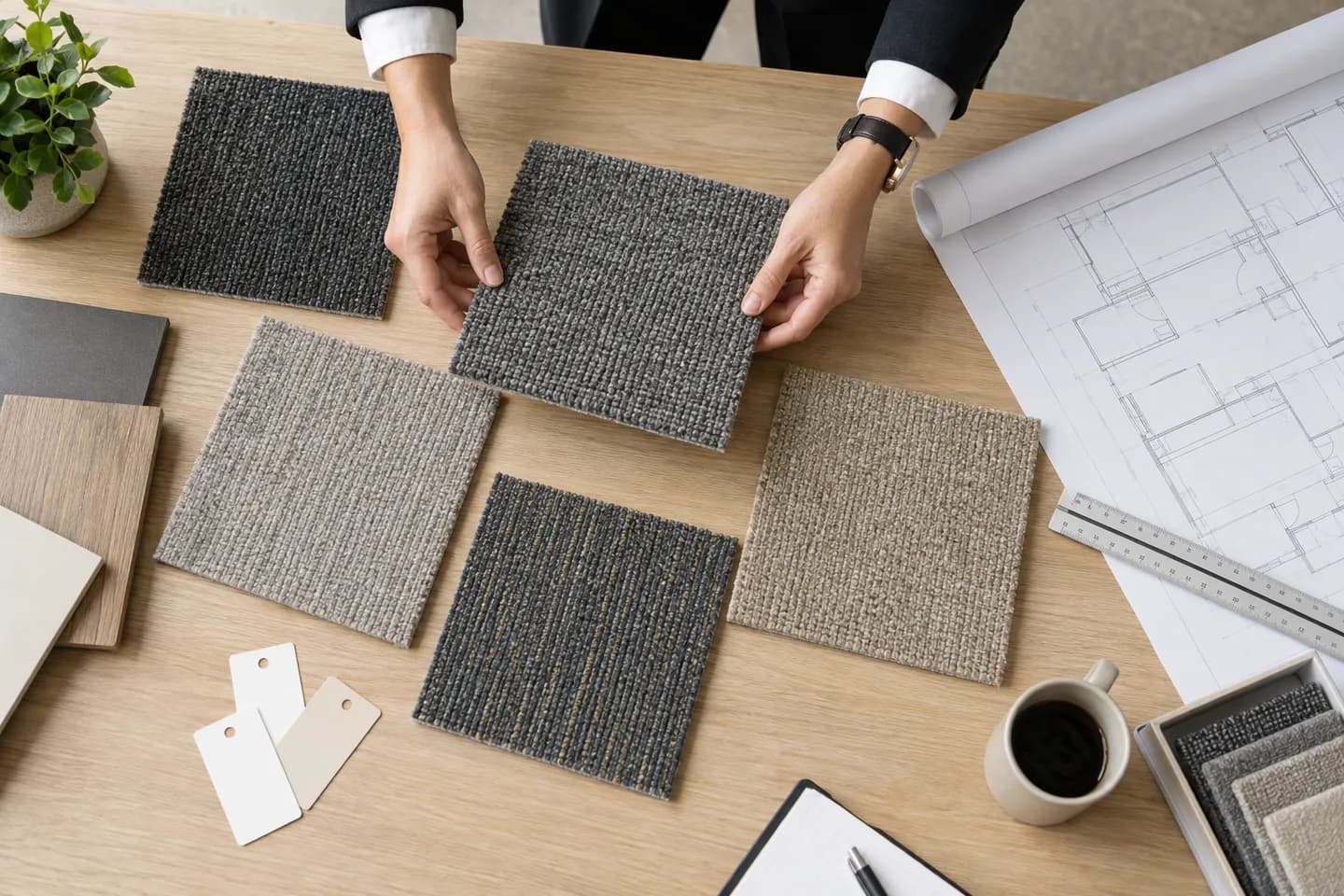
Copy this commercial carpet tile RFQ
Replace the brackets, attach the plan where available, and send the same record to every shortlisted supplier.
| RFQ field | What to state | Why it matters |
|---|---|---|
| Project and reply | Project name, city/country, buyer contact, issue date, response deadline and clarification contact. | Sets one programme and one communication route. |
| Rooms and area | Zone schedule, measured m², plan/BOQ, allowance owner, spares and units to quote. | Separates net area, cutting allowance, spare stock and cartons. |
| Product form | Commercial carpet tile, modular carpet tile, carpet plank or carpet square; requested module and layout. | Prevents another format being hidden inside one total. |
| Identity and appearance | Series, product code, colourway, sample reference, pattern direction or clearly named alternative. | Links the quote to the sample being reviewed. |
| Construction | Requested PP, nylon or polyester carpet tile where decided, plus backing and published dimensions. | Makes the construction actually being priced visible. |
| Use and installation | Office, hotel, corridor or meeting-room zones; substrate, access, phasing, adhesive and mock-up questions. | Shows where planning or a separate price line is needed. |
| Documents and samples | Full-tile sample, current data sheet, installation/care guidance and named project documents. | Makes the submittal pack part of the request. |
| Packing and delivery | Carton coverage, pallet/label needs, destination, arrival window, unloading constraints and proposed trade terms. | Makes freight, packing and handover assumptions comparable. |
| Commercial response | Currency, unit basis, total, freight, taxes/duties assumptions, validity, payment proposal, exclusions and variance register. | Shows whether a low total omits project scope. |
| 1 | COMMERCIAL CARPET TILE RFQ |
|---|---|
| 2 | Project / city / contact / response date: [ ] |
| 3 | Zones and measured area: [attach plan or BOQ] |
| 4 | Requested format: [carpet tile / modular carpet tile / carpet plank / carpet square] |
| 5 | Requested identity: [series / code / colourway / module / backing] |
| 6 | Alternatives: [not permitted / permitted only with a line-by-line variance schedule] |
| 7 | Use and installation: [office / hotel / corridor / substrate / phasing] |
| 8 | Samples: [full tile / colourway / receiving address / mock-up request] |
| 9 | Documents: [current data sheet / installation guidance / named project files] |
| 10 | Packing and delivery: [carton coverage / labels / destination / arrival window] |
| 11 | Quote response: [currency / unit and total / freight / tax assumptions / validity / exclusions] |
| 12 | Commercial discussion: [requested trade rule and named place, subject to written agreement] |
Check the RFQ before it leaves
- Attach one zone plan or BOQ and mark provisional quantities.
- Name the requested code and colourway, or explicitly permit a labelled alternative.
- Request a full sample and record where it will be reviewed.
- Separate supply-only work from adhesive, substrate preparation, installation, trims and removal.
- State delivery destination and required on-site window.
- List every project document needed by name.
- Require a variance line for every difference from the brief.
- Ask for quantity, carton coverage and spare stock on their own lines.
- Set one response date and a route for technical or commercial questions.

See which fields change the quote
| RFQ field | What to state | Why it matters |
|---|---|---|
| Product code, backing and module | Sample choice and technical-document matching | Name the quoted construction and each alternative. |
| Zone plan and quantity basis | Tile count, cartons, waste, spares and installation sequence | Quote net quantity and allowances separately. |
| Colour and layout direction | Sample review, mock-up and cutting plan | Confirm proposed colourway and permitted layout. |
| Documents required | Submittal timing and approval route | List current files separately from promotional material. |
| Destination and trade terms | Freight, packing, risk and arrival coordination | State named place and commercial assumptions. |
| Installation scope | Budget and programme responsibility | Keep supply, adhesive, preparation, fitting and trims separate. |
Move from reply to sample approval
First compare written replies, then review full samples against the named code and colourway. Keep the approved sample, final scope and supplier response together before issuing the purchase order.
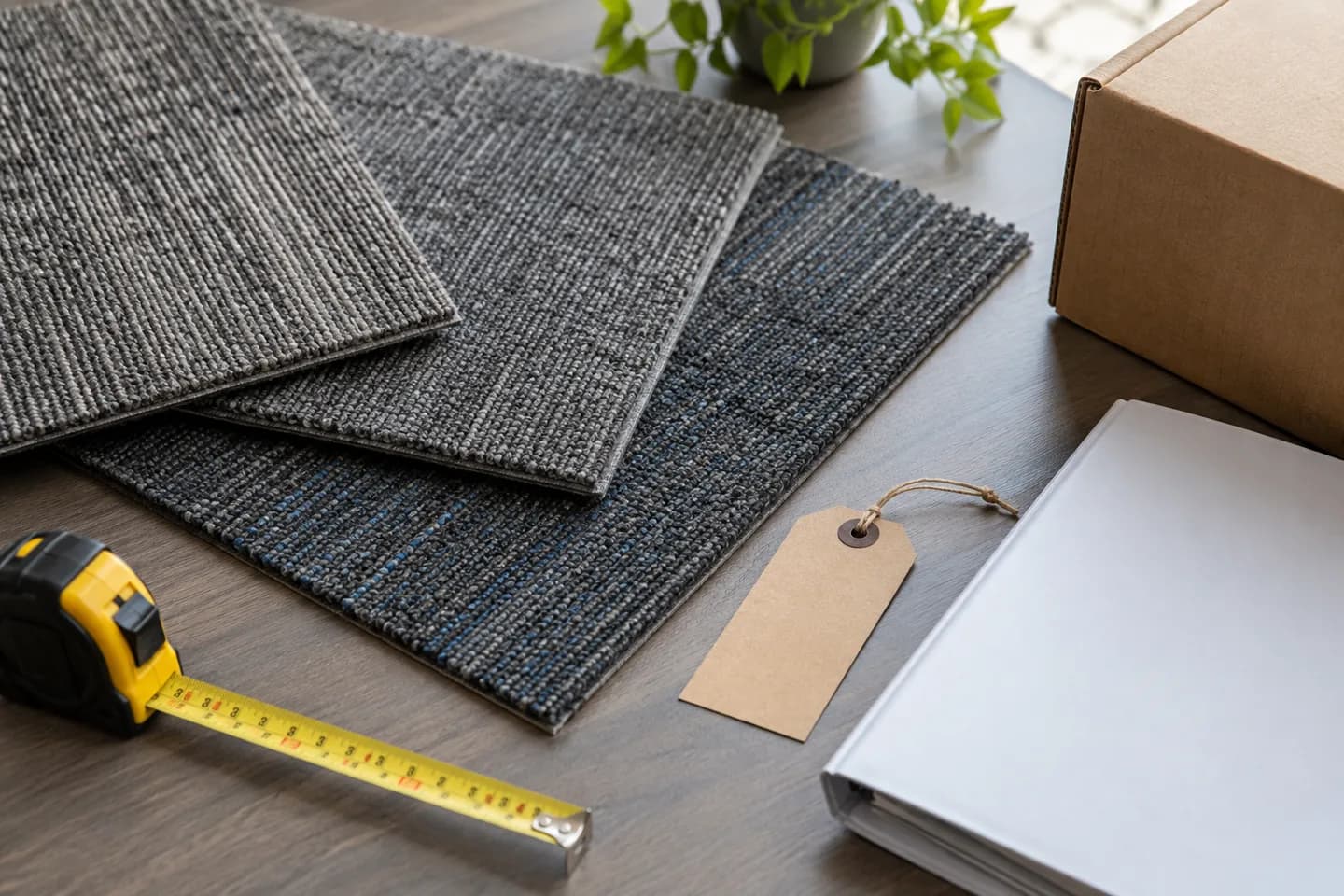
Browse commercial carpet tiles · Open collections · View technical documents · Send your RFQ
Frequently asked questions
What should a commercial carpet tile RFQ include?
Include the zone plan, quantity basis, requested format and product identity, samples, documents, packing, delivery destination, quote format and a variance record for alternatives.
Can an RFQ ask for PP, nylon or polyester carpet tile?
Yes. State the required fibre if it is decided. If it remains open, ask each supplier to identify the proposed fibre, product code and backing rather than treating different constructions as one item.
Should carpet tile quotes be compared by square metre only?
No. Compare the same product scope, quantity basis, carton coverage, samples, documents, freight assumptions, delivery place and exclusions before comparing price.
How should a buyer handle a supplier alternative?
Permit alternatives only when useful, then require a separate code, sample, construction fields, documents, price and a line-by-line variance record.
Sources & further reading
- Carpet and Rug Institute — Model Specification for Commercial Carpet
- International Chamber of Commerce — Incoterms® 2020
- UNIJOY — Commercial carpet tile specification support
Figures attributed to other manufacturers are their own published values, quoted for context. Different laboratories, sample build-ups and substrates are not directly comparable.