



How to Compare Carpet Tile Samples Before Design Approval
TL;DR
Compare carpet tile samples by recording the exact series and style/code, colourway, module, sample condition, review location, lighting, adjacent finishes, layout direction and decision date. A small sample, a screen image or a name alone cannot predict the complete installed appearance, batch relationship, pattern outcome, product performance or project suitability.
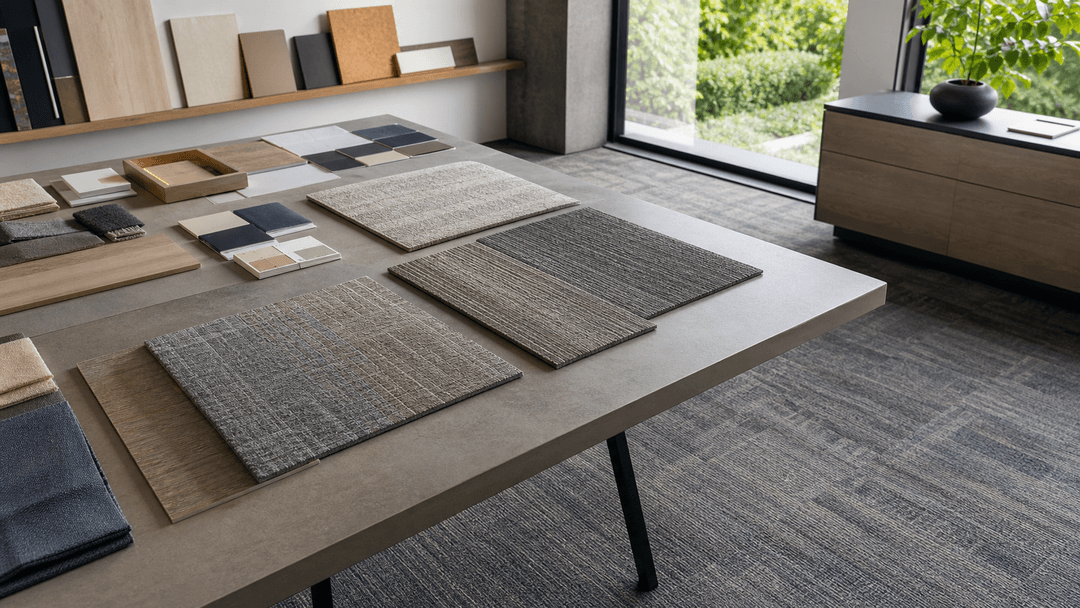
The direct answer: compare the sample in its decision context
Compare carpet tile samples by recording the exact series and style/code, colourway, module, sample condition, review location, lighting, adjacent finishes, layout direction and decision date. A small sample, a screen image or a name alone cannot predict the complete installed appearance, batch relationship, pattern outcome, product performance or project suitability.
A useful sample review does not ask the team to choose a favourite in isolation. It makes the conditions visible, keeps the proposed product identity attached to the physical sample, and records what still needs a current product document or a project mock-up. This protects the designer's visual intent while giving procurement a traceable approval record.
Open UNIJOY collections · Read the layout-pattern guide
What to record with each carpet tile sample
| Field | Record | Evidence boundary |
|---|---|---|
| Product identity | UNIJOY series plus exact style/code, colourway, module and sample reference. | A colour family, collection name or screen swatch does not identify the proposed product. |
| Viewing context | Location, daylight/ambient lighting condition, time/date, viewing angle and the adjacent wall, timber, fabric or furniture finishes. | One lighting condition does not predict every room, time of day or display. |
| Layout context | Proposed direction, module format, transitions, repeat/pattern note and the area being reviewed. | A loose sample does not prove a final layout, pattern match or installed visual result. |
| Sample condition | Size, cut edges, number of tiles, orientation and whether the sample is a current approved reference. | A sample does not establish batch continuity, stock or future availability. |
| Decision record | Reviewer, date, accepted/hold/reject decision, open visual questions and related product-document questions. | An informal preference is not a product specification or a contract term. |
| Evidence escalation | Ask for the current product sheet and any project-required document by the identified product; use a mock-up only when the project team decides it is needed. | A visual review does not replace technical, installation, certificate or project-suitability evidence. |
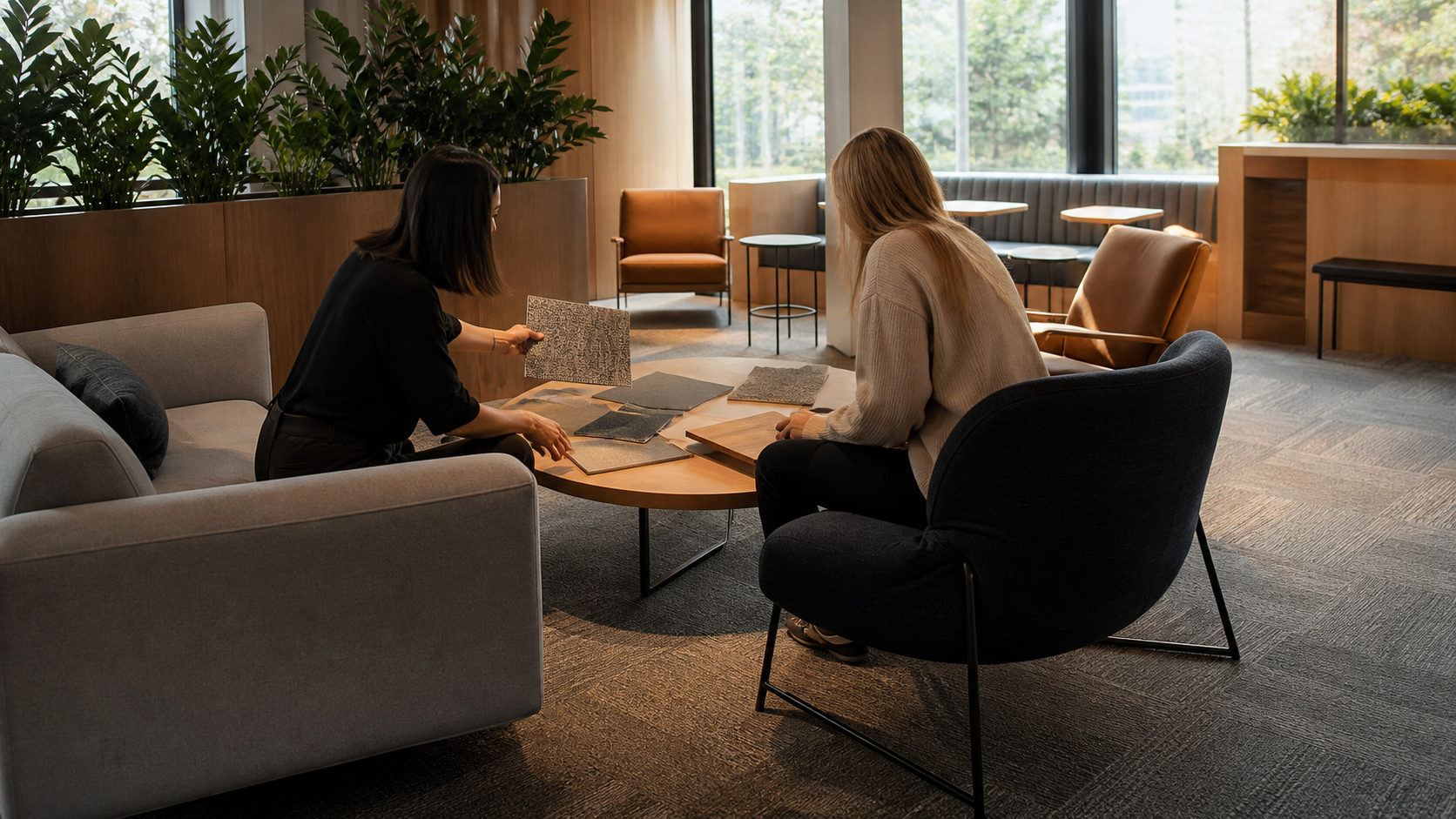
What a sample review can and cannot prove
| Marketing wording | Record or request | Do not infer |
|---|---|---|
| “It looks exactly like the screen” | The actual physical sample, viewing context and a recorded approval decision. | It does not prove every device, light source or installed view will appear the same. |
| “This sample guarantees the finished floor” | Product identity, approved sample record, layout review and any project-specific mock-up decision. | It does not prove batch continuity, pattern matching, installation result or future availability. |
| “Neutral works anywhere” | Adjacent finishes, actual project zones, lighting review and design decision record. | It does not prove a universal visual, accessibility or wellbeing outcome. |
| “Same collection means same result” | Exact style/code, colourway, module and current supporting documentation. | It does not prove that different styles or constructions are interchangeable. |
| “Approved sample means technically approved” | Separate current technical, installation and project-required evidence. | A design approval is not a performance, certificate or installation approval. |
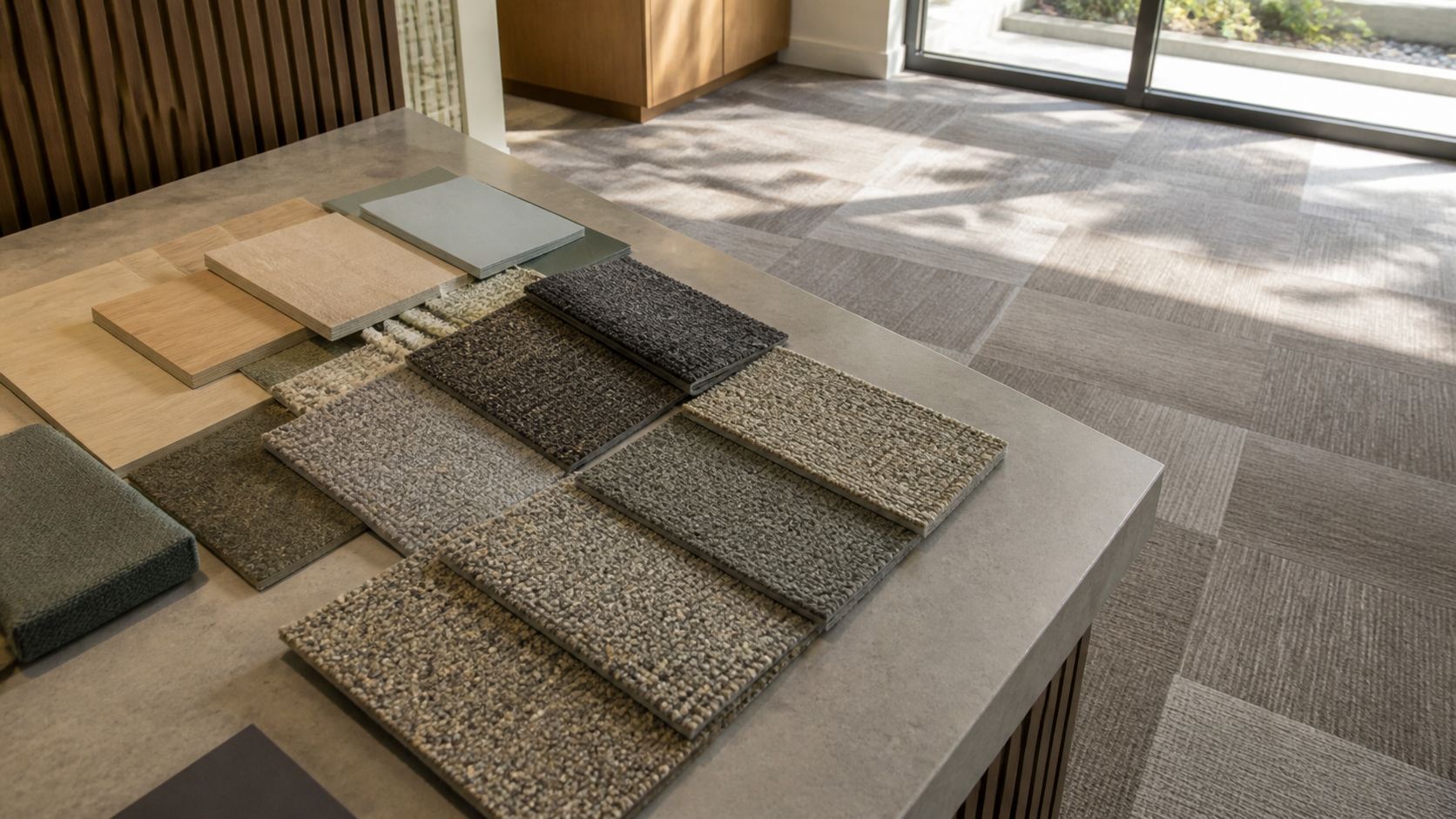
A controlled design-approval sequence
- Identify every sample by UNIJOY series plus exact style/code, colourway and module; do not use an unlabelled mood-board image as the record.
- Place samples beside the actual or representative adjacent finishes and record the location, light condition and review date.
- Set out more than one tile when direction, repeat or module relationship matters; record the intended layout question rather than promising a result.
- Photograph or log the review for the project file, noting the sample condition and any limitations of the review.
- Write an accepted, hold or reject decision with the responsible reviewer and list the open questions separately.
- Request the current product sheet and any required evidence for the identified option; do not let a visual preference stand in for technical proof.
- Use the live UNIJOY collection route to identify options, then send the code and decision questions through Contact.
Use the live collection page to identify the proposed UNIJOY option, then send the code, sample record and unresolved project questions for a current response.
Frequently asked questions
How should carpet tile samples be compared before approval?
Record the exact series, style/code, colourway and module, then review physical samples beside relevant finishes under the stated project lighting condition. Keep the location, date, layout question, reviewer and decision in the approval record.
Can a carpet tile sample guarantee the installed appearance?
No. A sample supports a visual decision under the conditions reviewed. It does not prove every lighting condition, batch relationship, layout result, installation result, product performance or future availability.
Should a design team review more than one carpet tile?
When direction, module relationship, repeat or adjacent colour is part of the decision, review enough tiles to make that question visible. Record the intended layout rather than assuming a loose sample predicts the floor.
Does design approval replace technical documents?
No. Keep a visual approval separate from the current product sheet and any technical, installation, report or certificate evidence the project requires.
Sources & further reading
- CIE 015:2018 — Colorimetry, 4th edition
- ISO/CIE 11664-1:2019 — Colorimetric observers
- Carpet and Rug Institute — Model Specification for Commercial Carpet (2018)
- Shaw Contract — product specification viewer (peer documentation example)
- UNIJOY — product collections
Figures attributed to other manufacturers are their own published values, quoted for context. Different laboratories, sample build-ups and substrates are not directly comparable.