



Tufted, Pile and Total Carpet Tile Weight Compared
TL;DR
Tufted yarn weight, finished pile weight and total tile weight describe different material scopes. The first concerns yarn used in tufting; finished pile concerns the textile surface after finishing; total weight includes the backing and coatings. UNIJOY 21904 and 21903 each publish Tufted Weight of 580±5% g/m². Use that shared field for a like-for-like yarn comparison, then obtain finished-pile or whole-tile figures when the tender, handling plan or shipping calculation requires them. Convert units only after matching the field and area basis.
Understand weight by layer
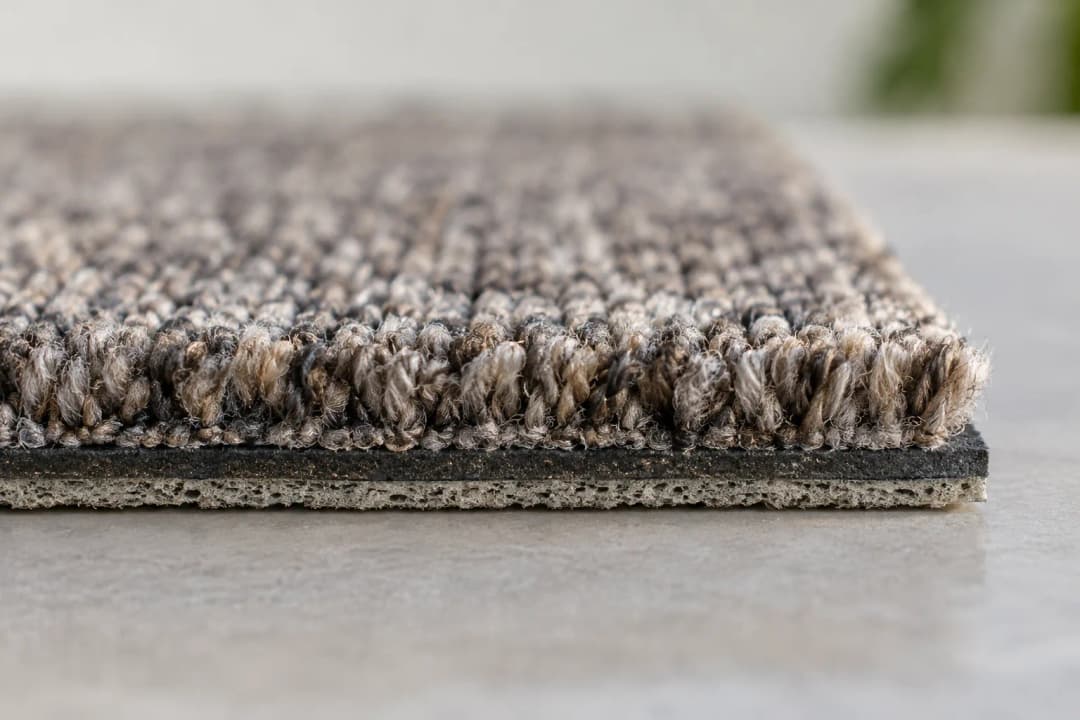
Carpet tile weight starts with a simple question: which material is being weighed? Yarn inserted during tufting, finished face pile and the whole tile with backing answer different procurement needs. Name the field, included layers and area unit before comparing two quotations. Use whole-tile mass for handling and freight planning; use the relevant product construction and performance information when selecting a floor for a room.
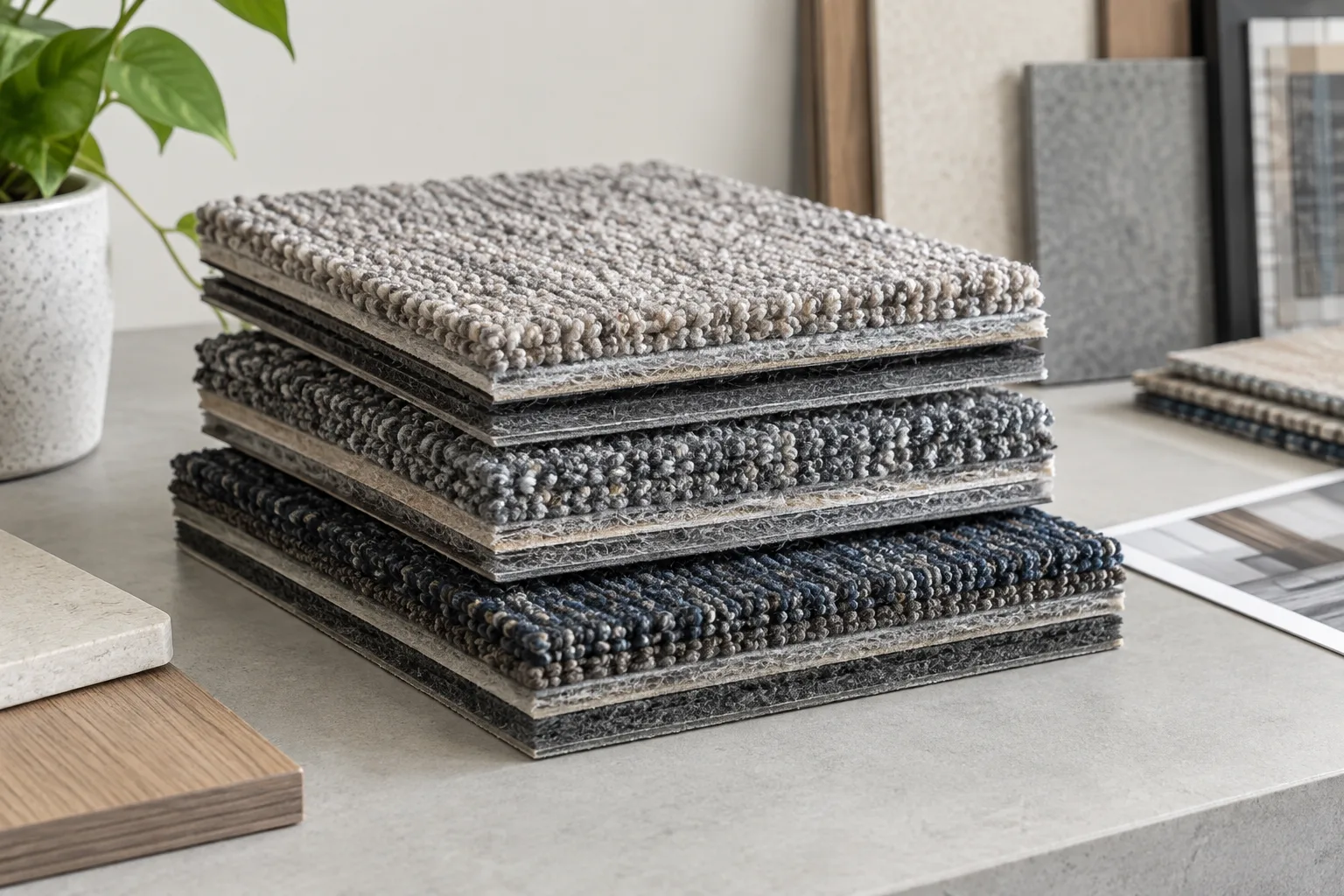
UNIJOY 21904 Light And Shadow and 21903 Nature both publish Tufted Weight of 580±5% g/m². That is a useful shared yarn-field reference for comparing the two designs. If your project also needs finished-pile or complete-tile mass, request those values for the selected code and backing as separate fields.
“Tufted yarn weight” often means yarn input per unit area. Shearing and finishing can make a measured finished face mass different. “Pile weight” is used differently across documents; some specifications distinguish total pile from only the surface pile above the backing. Require the supplier's definition before equating labels.
| Field on a sheet | Possible material scope | Ask before comparing |
|---|---|---|
| Tufted yarn / tufted weight | Yarn fed into tufting per area | Is this input yarn or a finished measured mass? |
| Total pile / pile weight | Pile yarn, sometimes including yarn within backing | Which method and which part of the tuft are included? |
| Surface / finished face weight | Usable pile above backing, after finishing | Was the pile sheared? Is this a measured field? |
| Total tile weight | Entire tile including backing and coatings | Which backing option and area basis? Do not equate it with yarn mass. |
Convert the same field between units
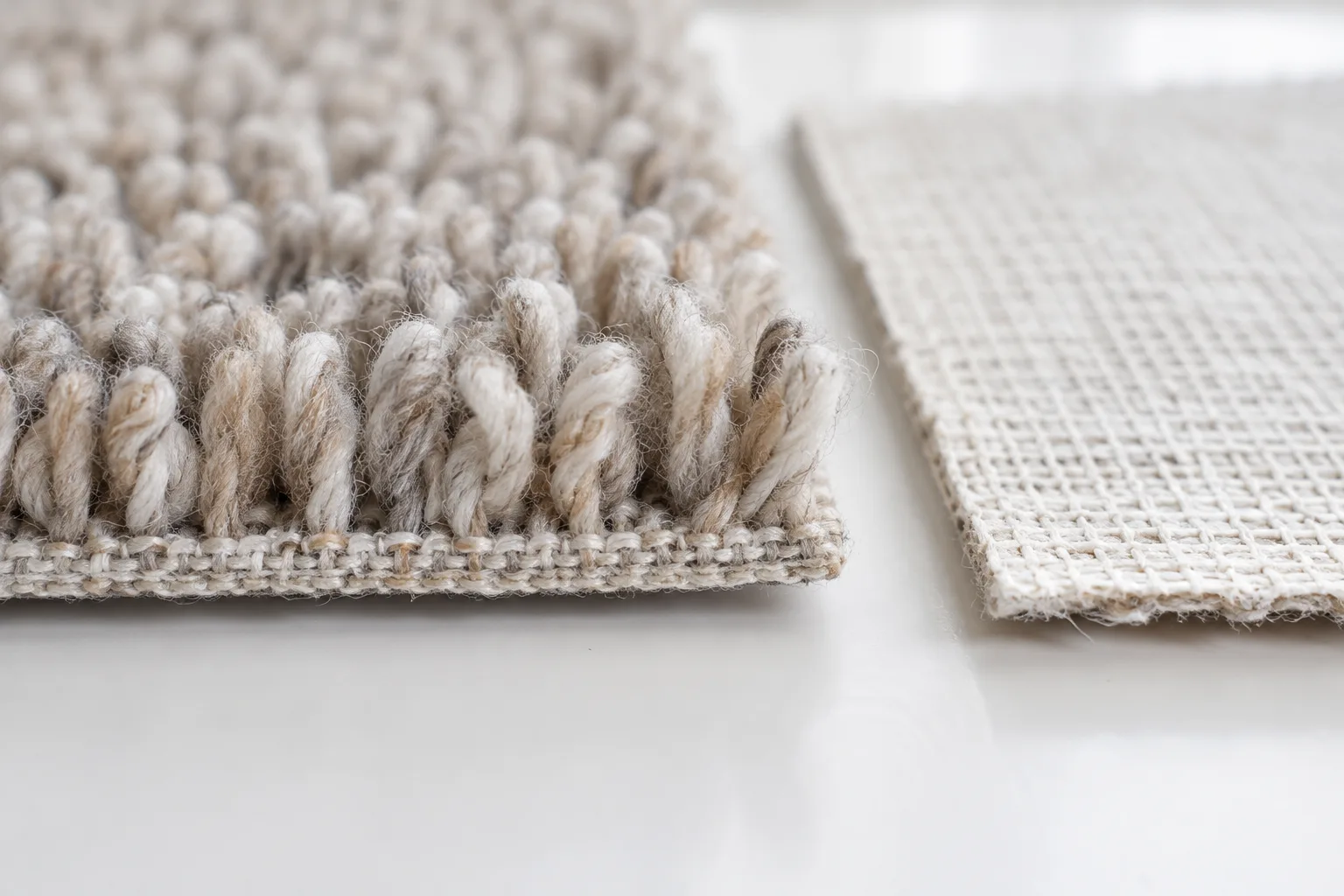
Unit conversion — teaching example, not UNIJOY data
- Assume a supplier declares the same field as 20 oz/yd².
- 1 oz = 28.3495 g; 1 yd² = 0.836127 m².
- 20 × 28.3495 ÷ 0.836127 = 678.1 g/m², rounded to 678 g/m².
- This converts units only. It cannot turn yarn input into finished pile or total tile weight.
Compare published data for 21904 and 21903
| Required field | 21904 · Light And Shadow | 21903 · Nature | What to do |
|---|---|---|---|
| Published Tufted Weight | 580±5% g/m² | 580±5% g/m² | Compare this named yarn field on the same basis. |
| Finished/surface pile mass | — | — | Add as a separate field if the tender uses it. |
| Total tile mass | — | — | Add for the selected backing and freight plan. |
| Other context | PNMIX®; multi-level loop; 250 × 1000 mm | PNMIX®; multi-level loop; 250 × 1000 mm | Compare actual samples, pile height and use requirements. |
The shared 580±5% g/m² declaration belongs to the published Tufted Weight field. The two designs should be compared as complete constructions with samples; any finished-pile or total-tile figure needs its own label and area basis.
Build a consistent quotation
Put each weight in the right column
- 1Record the exact code, backing option and intended use.
- 2Group tufted yarn, finished pile and whole-tile mass in separate columns.
- 3Convert oz/yd² to g/m² only within the same column and document basis.
- 4Compare physical samples and approve the named construction with the current sheet.
Choose the right sample and data
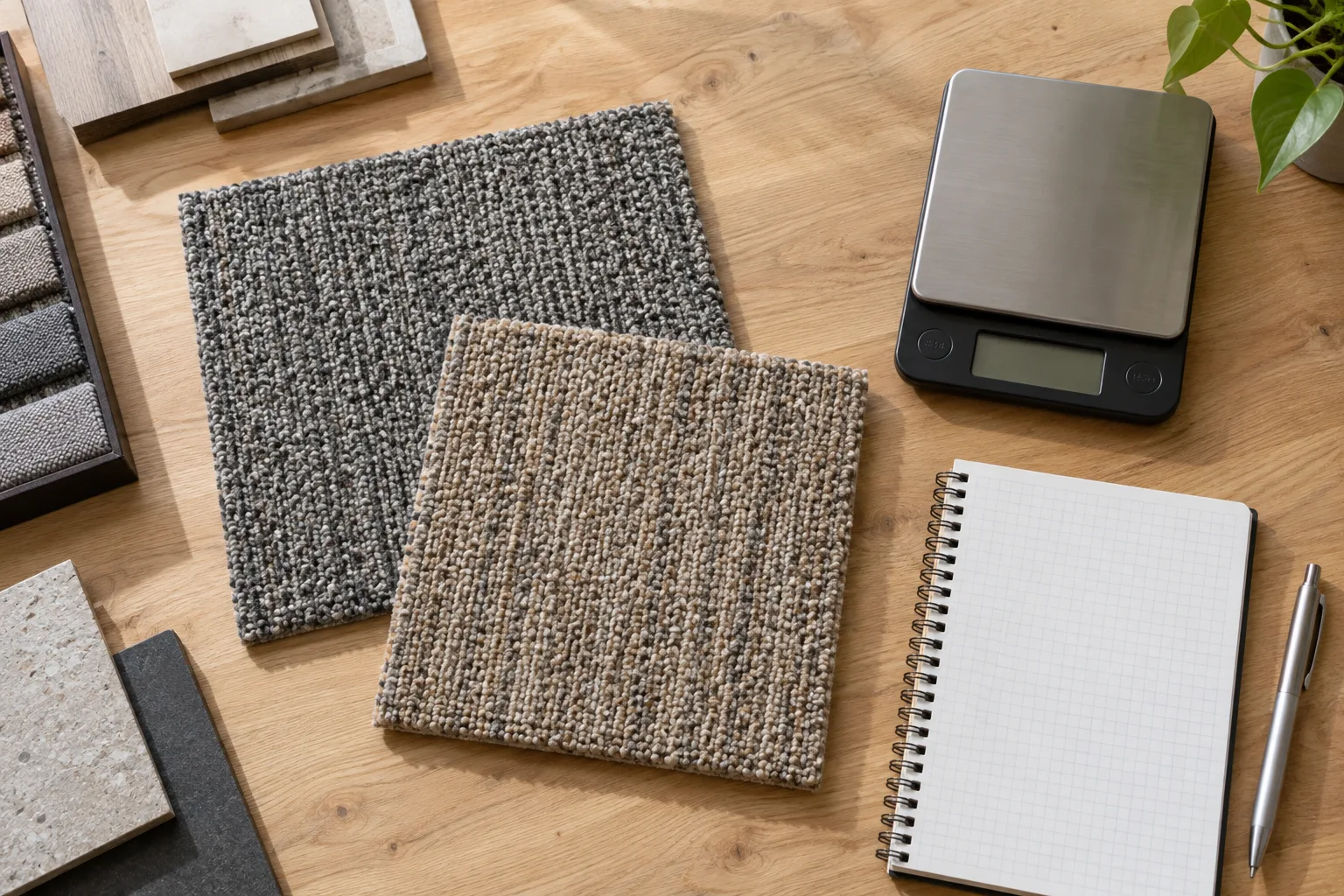
Send UNIJOY the two codes, intended room and selected backing. Request current sheets and full-size samples; include finished-pile or whole-tile mass in the request when your tender or logistics plan uses those fields.
Frequently asked questions
Is tufted weight the same as finished pile weight?
Not necessarily. Tufted weight can refer to yarn input, while finishing or shearing may change finished pile mass. Ask how the exact manufacturer defines each field.
How do I convert oz/yd² to g/m²?
Multiply by approximately 33.906. For the same weight field, 20 oz/yd² is about 678 g/m². This is a teaching example, not UNIJOY product data.
Does a heavier total carpet tile last longer?
Total tile mass includes backing as well as yarn. It does not establish wear life; compare the construction, use conditions and relevant test evidence.
Can I infer total weight from UNIJOY's 580±5% g/m² field?
No. The public field is labelled Tufted Weight and the page does not separately list total tile mass. Request a current document for the selected code and backing.