



Carpet Tile Gauge and Stitch Rate: Meaning and Comparison
TL;DR
Gauge measures the spacing between tuft rows across a carpet tile; stitch rate counts insertions along each row. A 1/12-inch gauge is about 2.12 mm between rows, or 12 rows per inch across. UNIJOY 21904 Light And Shadow and 21903 Nature share that published gauge, PNMIX yarn, multi-level loop construction and 580±5% g/m² tufted weight. Their visual designs differ. Compare full-size samples in the intended room, and add stitch rate in the same unit for both codes when the tufting grid is part of your specification.
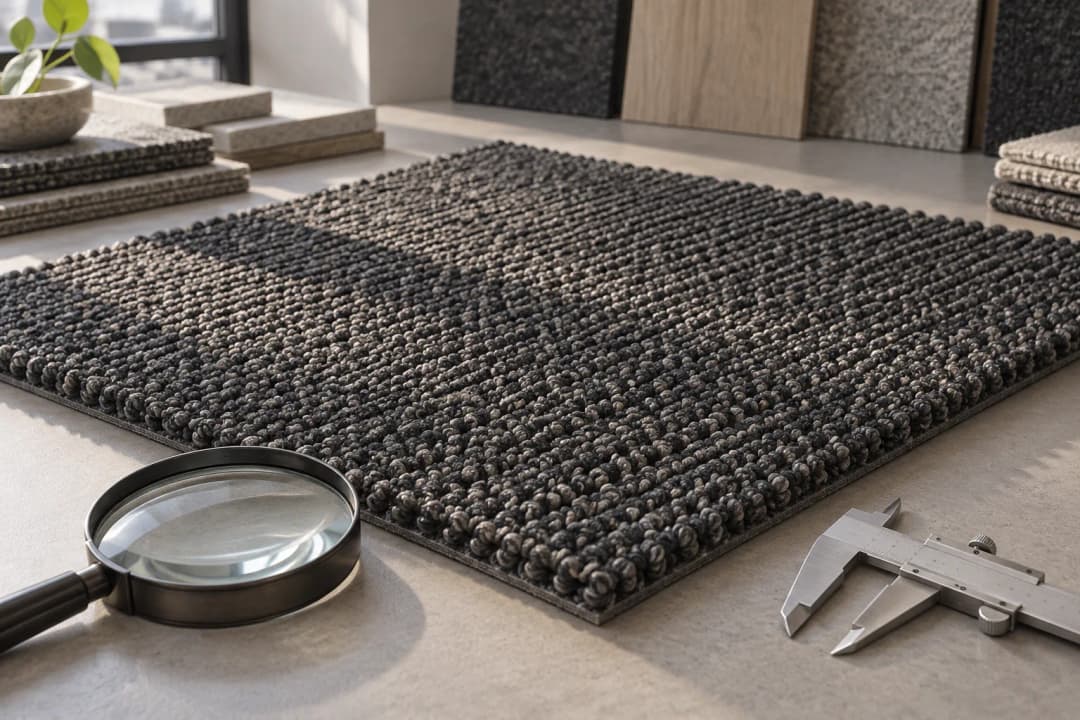
Read gauge and stitches in two directions
For an office carpet tile, gauge describes the distance between needle rows across the fabric. Stitch rate counts insertions along its length, normally per inch or per 10 cm. Read the two fields together as a grid: a 1/12-inch gauge gives roughly 12 rows across an inch, while the lengthwise stitch count has its own value. Record units, yarn, pile form and backing beside the sample code so that two offers can be compared on the same basis.
UNIJOY's published 21904 Light And Shadow and 21903 Nature entries share a 1/12-inch gauge, multi-level loop construction, PNMIX yarn and 580±5% g/m² tufted weight. These shared fields give you a consistent starting point for comparing two different visual designs. View full-size samples in the intended room; include stitch rate from the current product sheets when pile placement is part of the project specification.
- Across: 1/10 in between tuft rows
- Along: 10 stitches per inch
- Worked grid: 10 rows/in × 10 stitches/in = 100 insertion points/in²
Across the needle bar, 1/12 inch is approximately 2.12 mm between adjacent needle positions; its reciprocal is about 12 rows per inch (47.2 per 10 cm). Along the moving backing, the stitch rate has its own unit. If a teaching grid uses 10 stitches per inch along and a 1/10-inch gauge across, its approximate grid count is 10 × 10 = 100 tufts per square inch. That grid is an illustration, not a UNIJOY specification.
A number stated per 10 cm cannot be compared directly with a number per inch. Convert one direction at a time: multiply a per-inch count by 3.937 to express it per 10 cm. Record whether the sheet calls the value nominal, measured or subject to a tolerance.
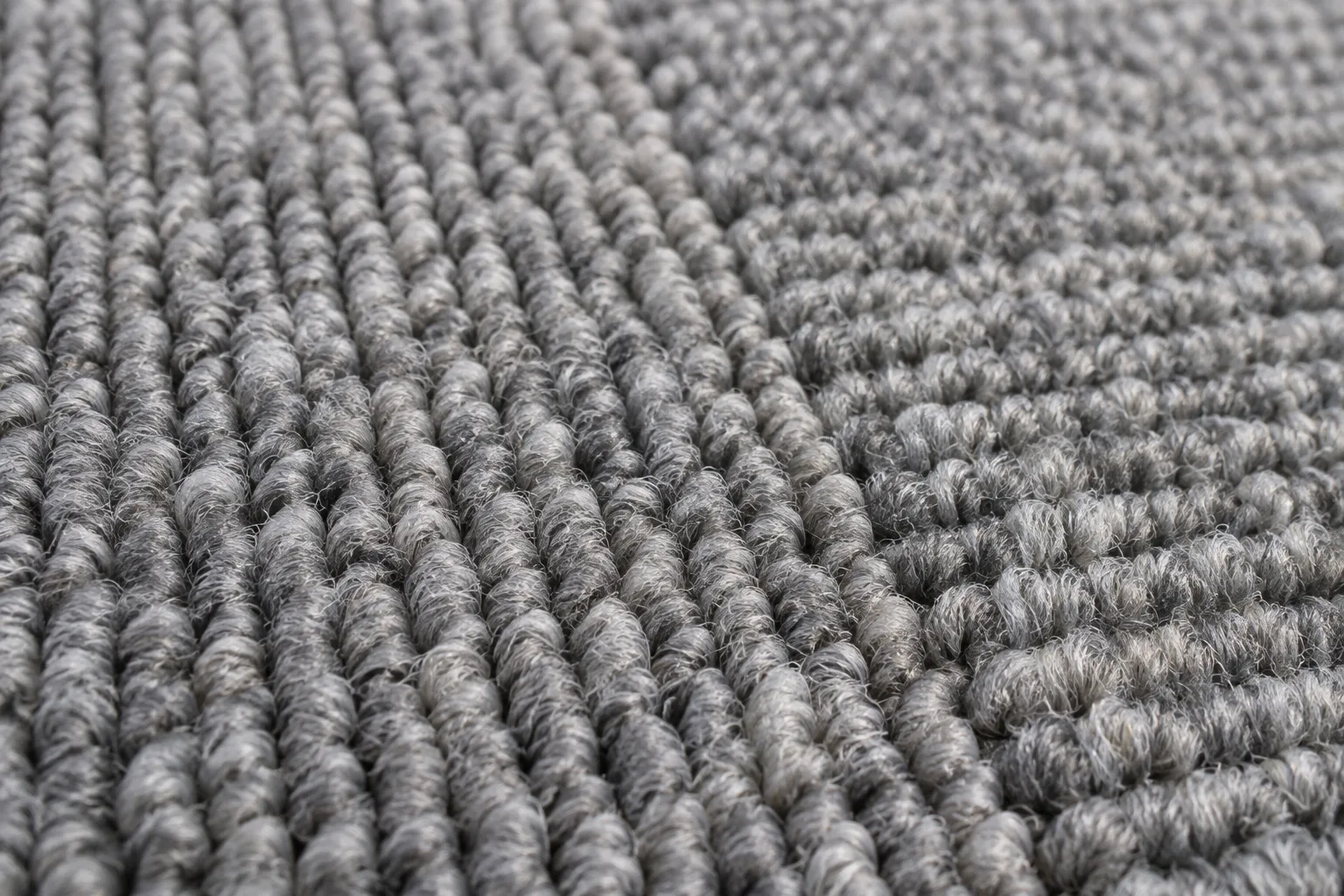
Compare 21904 and 21903
| Same field | 21904 · Light And Shadow | 21903 · Nature | Buyer action |
|---|---|---|---|
| Gauge | 1/12 in (published) | 1/12 in (published) | Same declared spacing across the fabric. |
| Stitch rate | Confirm on current sheet | Confirm on current sheet | Compare both codes in stitches/in or stitches/10 cm. |
| Construction / fibre | Multi-level loop / PNMIX® | Multi-level loop / PNMIX® | Examine the two finished textures and backing options. |
| Tufted weight | 580±5% g/m² (published) | 580±5% g/m² (published) | Compare with the same yarn, pile and backing fields. |
| Design | Light And Shadow | Nature | View full-size samples under project lighting. |
The two codes share several published construction fields; their pattern and visual direction are the clearest distinction in the public catalogue. Use samples to choose the design, then complete the construction record for the selected code.
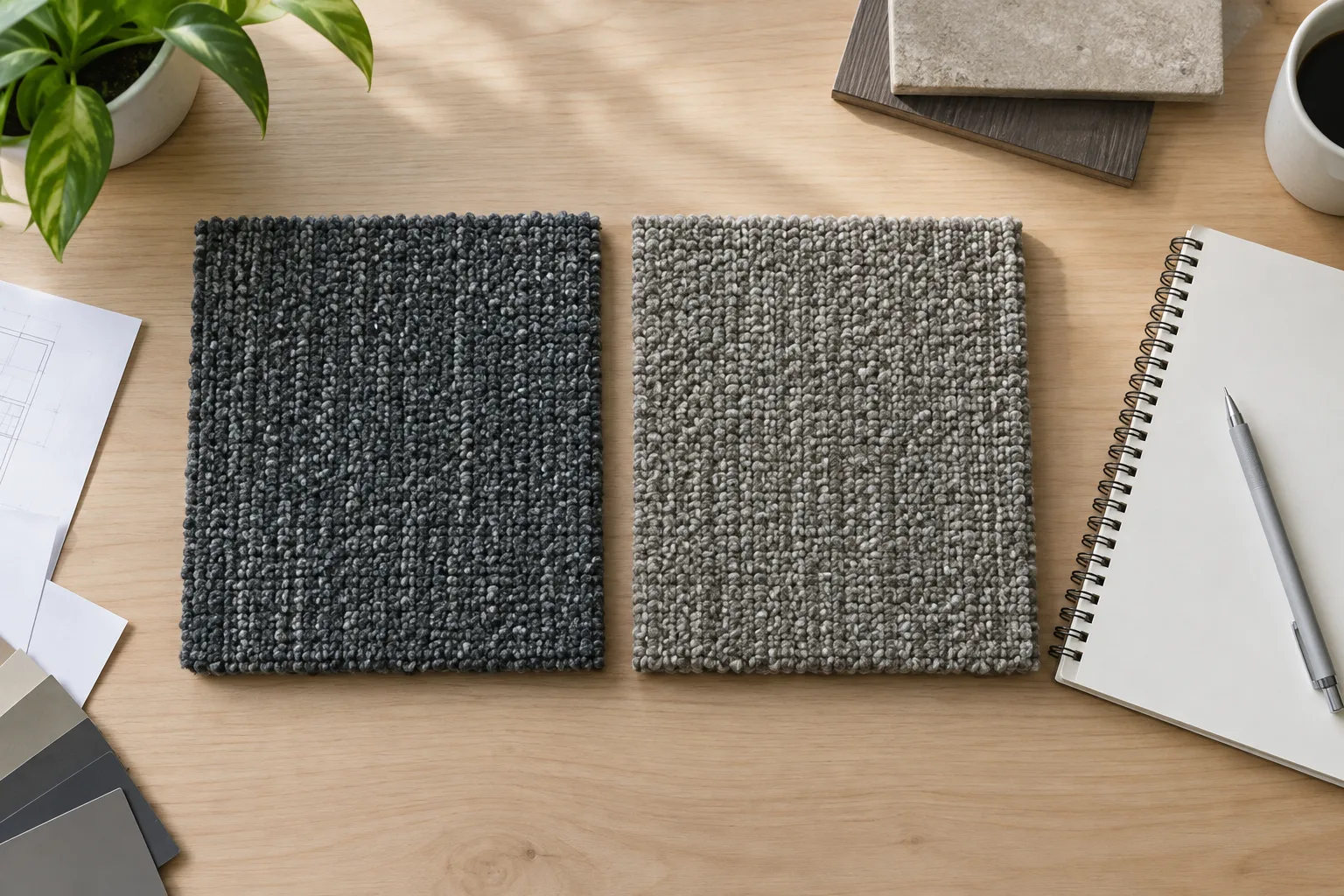
Build a like-for-like construction record
Compare two carpet tile codes
- 1Set the office zone, traffic and intended visual effect.
- 2Place each code's gauge and stitch rate in matching units beside yarn, pile and backing.
- 3Use the grid to understand texture placement, then compare full-size samples in the room light.
- 4Approve the selected code, colourway, backing and current product record together.
From tufting grid to finished floor
The tufting grid helps explain texture and pattern resolution. For an occupied office, add practical checks: how the finished surface looks under the project's lighting, how the backing meets the subfloor and what care the selected tile needs. Use relevant performance reports for the actual construction when the specification calls for them.
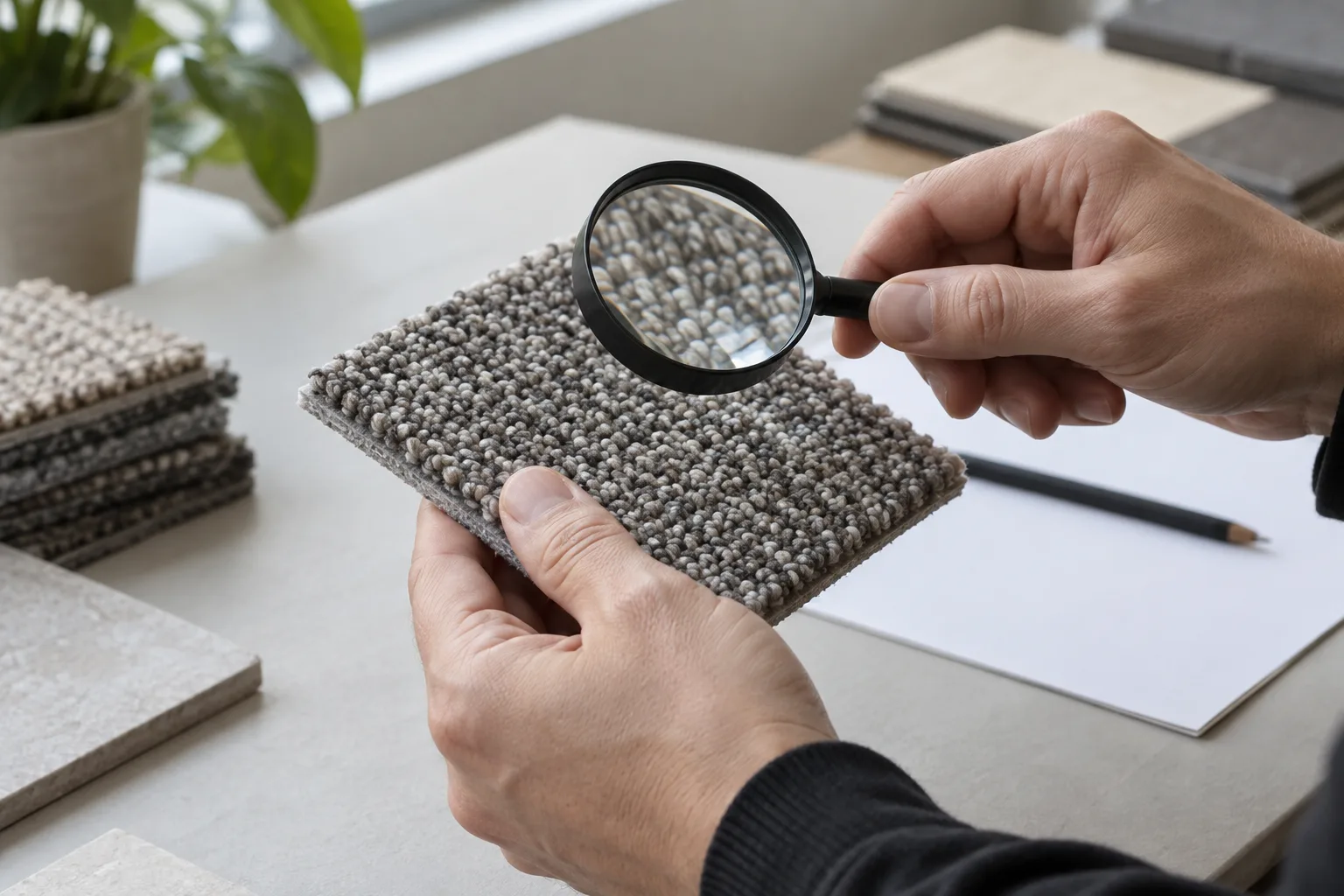
Specify your shortlist
Send UNIJOY the office zone, preferred design and both product codes. Ask for matching full-size samples and the current product sheets with gauge, stitch rate, yarn, pile and backing, then approve one complete construction.
Frequently asked questions
What does 1/12 gauge mean in a carpet tile?
The nominal needle spacing is one twelfth of an inch across the fabric, about 12 tuft rows per inch. It does not state the lengthwise stitch rate.
Can I calculate stitches from gauge alone?
No. Gauge and stitch rate describe perpendicular directions. Ask for the stitch count and its unit for the exact code.
Are UNIJOY 21904 and 21903 identical because both say 1/12 gauge?
No. Their published design labels differ, and the public pages do not publish stitch rate. Compare current documents and full-size samples before approving either.