



Commercial Carpet Tile Cost: Compare Quotes
TL;DR
Commercial carpet tile cost cannot be compared safely from a headline price. First make every supplier quote describe the same product construction, quantity basis, delivery term, documents and exclusions. Only then can a buyer compare price, risk and missing scope without pretending that one public price fits every project.

1. The direct answer: compare scope before cost
Commercial carpet tile cost cannot be compared safely from a headline price. First make every supplier quote describe the same product construction, quantity basis, delivery term, documents and exclusions. Only then can a buyer compare price, risk and missing scope without pretending that one public price fits every project.
This guide is for procurement teams, distributors, contractors and specifiers collecting two or more carpet-tile quotations for the same project.
A carpet tile quote is a statement of scope, not only a number. Two offers can show the same currency and unit but cover different tile formats, face yarn, backing, sample approval, packing, delivery point, test documents or replacement support. Comparing the total before those fields align rewards the least complete description, not necessarily the lower project cost.
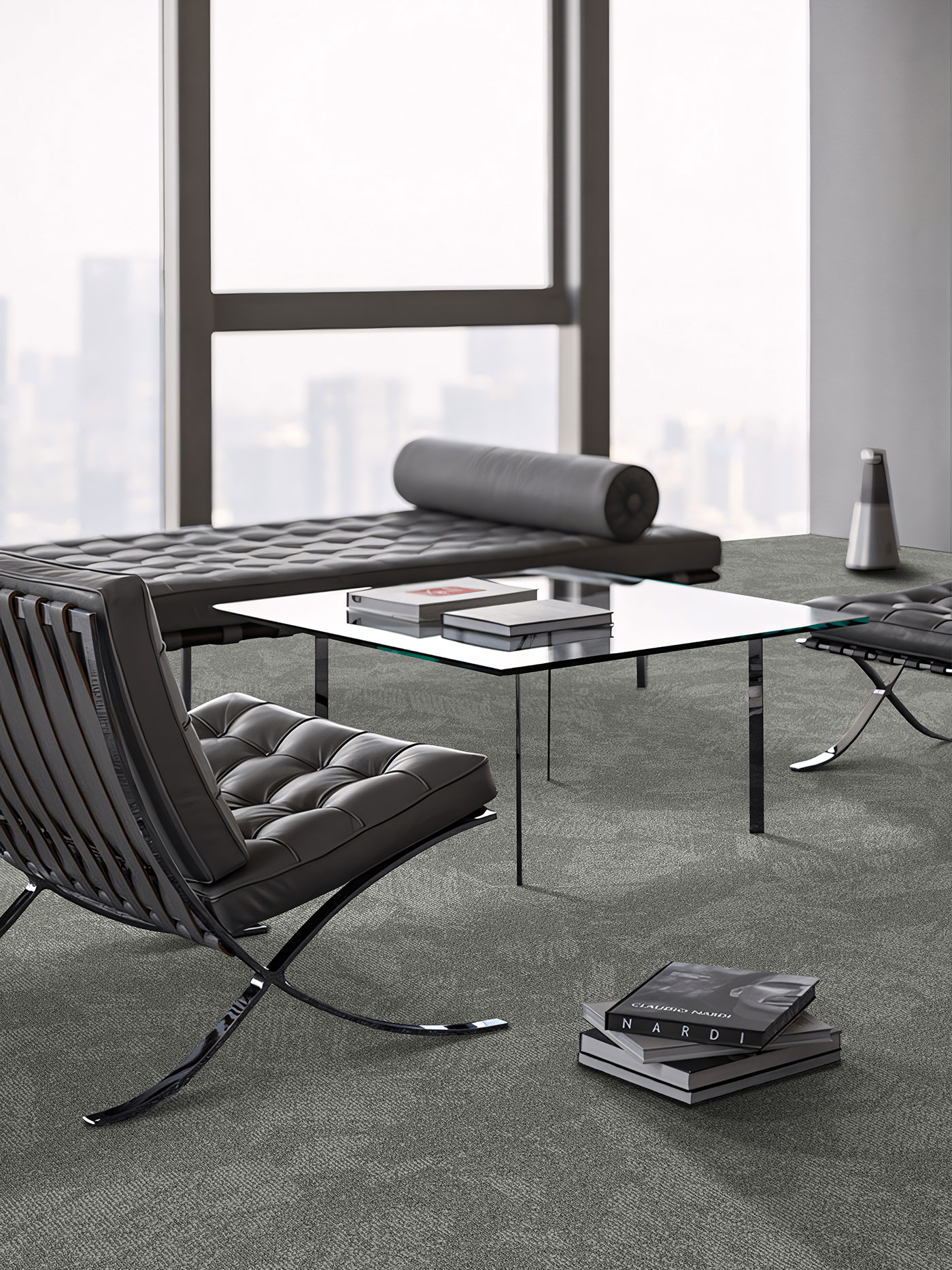
2. The comparable-quote matrix
Send the same matrix with every RFQ. A blank cell is not a zero: it is an item requiring clarification before comparison.
3. How to normalise quotes without inventing a price
Normalise the quote before ranking it. Keep the product and commercial scope in separate columns, then mark every row as included, excluded, not applicable or pending confirmation. Incoterms® should name both the rule and the named place; ICC explains that the rules allocate defined costs, risks and obligations, but do not replace the sales contract or product specification.
| Field group | Record for every supplier | Why it changes comparability |
|---|---|---|
| 1. Product identity | Product code, colour, module, face yarn, pile construction and backing must all point to the submitted sample. | A series name alone can contain multiple constructions. |
| 2. Quantity and pack basis | State net area, planned spare allowance, tiles per carton and whether price is per tile, carton, square metre or total lot. | Do not convert formats without showing the calculation. |
| 3. Delivery and commercial basis | Record currency, validity, payment terms, Incoterms® version, named place, freight, insurance, tax/duty assumptions and unloading responsibility. | A destination name without the rule is incomplete. |
| 4. Evidence and exclusions | List requested reports, sample approval, pattern/layout support, installation scope, warranty wording and every exclusion. | Missing evidence is not evidence of equivalence. |
4. Six quote patterns that need clarification
Six quote patterns that need a clarification—not an assumption
- The product description says only ‘carpet tile’ or a collection name.
- The unit is not stated, or one quote is per carton while another is per square metre.
- The delivery term has no Incoterms® version or named place.
- A certificate or test result is mentioned without product code, sample build-up or report reference.
- The quote is silent on packing, spare tiles, freight, unloading or applicable taxes.
- A promised lead time, MOQ or performance value is not documented in the supplier’s current written offer.
5. What to send with the RFQ
Before asking UNIJOY for a quotation, send the plan area, zones, preferred formats/colours, delivery location, target documents and the exact fields above. We can then return a scope that can be compared with other offers, rather than a number detached from the project.
Frequently asked questions
Why can two carpet tile quotes with the same unit price be different?
They may describe different constructions, price units, pack quantities, delivery terms, documents or exclusions. Do not rank the offers until those fields are shown side by side and any blank item is clarified.
Should a carpet tile quote include an Incoterms rule?
For an international sale, the quotation should state the agreed Incoterms® rule, version and named place. The rule helps allocate defined costs, risks and obligations; it does not replace the technical specification or sales contract.
Can a buyer compare price per square metre only?
It is a useful normalised unit only after format, pack basis, project quantity, delivery scope and exclusions are aligned. Price per square metre alone cannot show whether two submitted tiles or commercial terms are equivalent.
What evidence should be requested with a carpet tile quotation?
Request the product code and complete construction, the documents required by the project, a physical sample, applicable test-report references and a written list of inclusions and exclusions. Verify that every report matches the submitted build-up.
Sources & further reading
- International Chamber of Commerce — Incoterms® 2020
- ICC — Incoterms® 2020 practical wallchart
- Fermanagh and Omagh District Council — Guide to Procurement
- CommerceKit — Supplier Quote Checklist (competitor research)
- UNIJOY — How to vet a Chinese carpet-tile manufacturer
Figures attributed to other manufacturers are their own published values, quoted for context. Different laboratories, sample build-ups and substrates are not directly comparable.