



Carpet Tile Adhesive and Subfloor Compatibility: Confirm the Whole Installation System
TL;DR
Do not select a carpet tile adhesive from the floor-covering name alone. Confirm the exact tile code and backing, identify the substrate and any existing finish, define repair and preparation, obtain the approved adhesive or fixation method for that combination, and record the site-condition and test requirements before work starts. Treat a change in backing, substrate, primer, levelling compound or adhesive as a system change that requires reconfirmation.

Define the five-part installation system
Build the decision around five named items: exact carpet tile and backing; substrate or existing finish; repair and preparation products; adhesive or alternative fixation; and the site-condition, test and acceptance record. If one item is unnamed, the installation brief is incomplete.
The useful question is not ‘Which glue works for carpet tile?’ It is ‘Which approved system connects this exact code to this prepared substrate under this project’s conditions?’
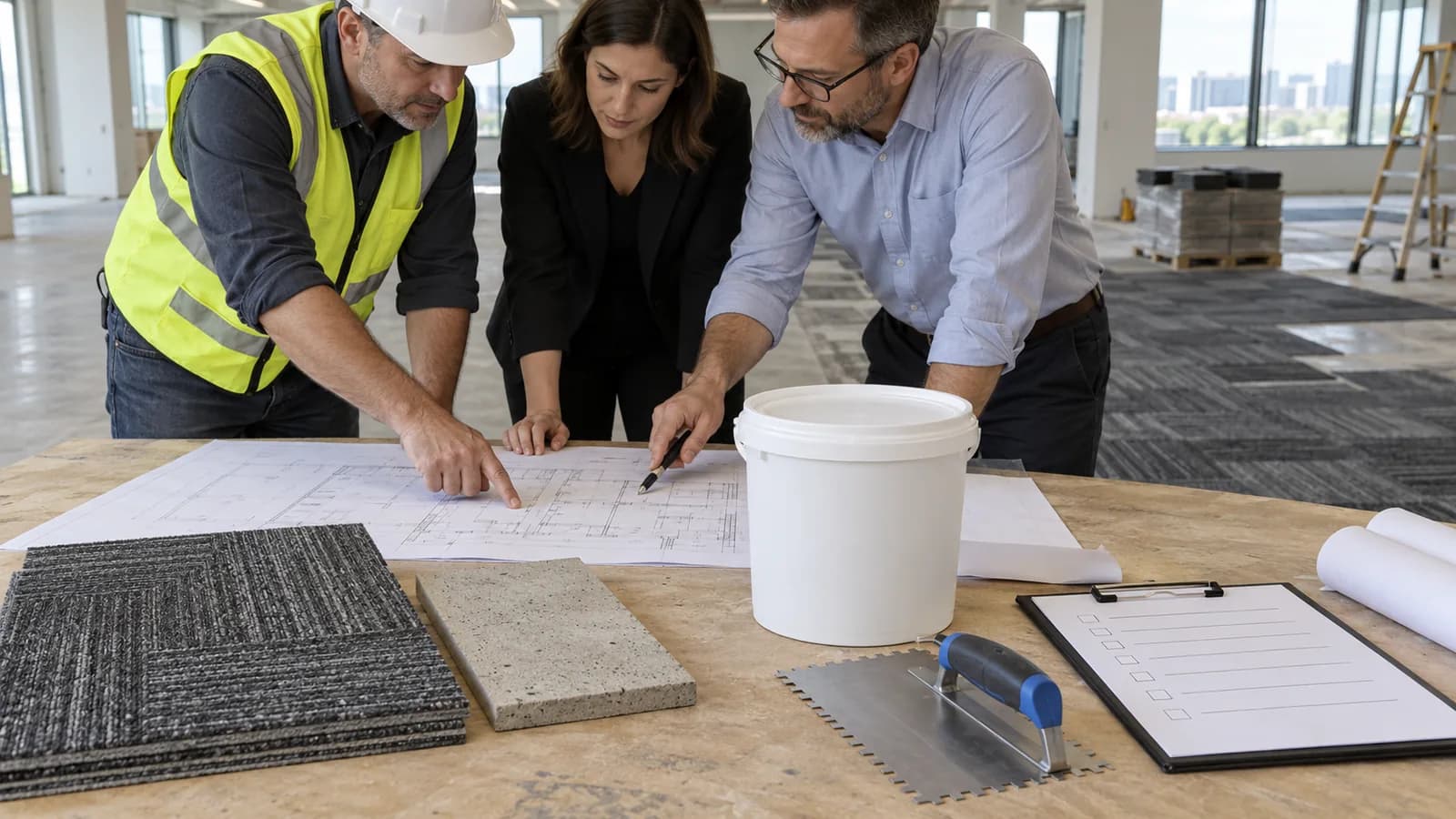
Compare substrate scenarios on the same fields
Concrete or screed requires a defined surface condition, repairs and the project’s moisture and pH route. Raised access floors add panel stability, joint layout, access needs and an approved fixation approach. Existing hard finishes add bond, cleanliness and preparation checks.
Compare every scenario with the same fields so a change of room or substrate cannot silently inherit the wrong preparation or fixing method.
| Substrate scenario | Confirm before specification | Coordinate at installation | Handoff evidence |
|---|---|---|---|
| Concrete or screed | Surface, repairs, moisture and pH route | Preparation products and fixing method | Readings, product records and photos |
| Raised access panels | Panel type, stability, joints and access | Layout offset and approved releasable fixation | Panel map and access method |
| Existing hard finish | Permission, bond, damage and contamination | Cleaning, abrasion or preparation route | Area map and acceptance record |
| Mixed or repaired substrate | Each zone and boundary | Zone-specific preparation and transition | Colour-coded plan and sign-off |
Control residues, repairs and product changes
Old adhesive residue is a condition to classify, not a surface to cover by habit. Record where it occurs, how firmly it remains, which removal or encapsulation route is proposed and which supplier accepts the resulting surface.
When a primer, levelling compound, backing or adhesive changes, reopen the compatibility record. Similar product names do not make two system combinations equivalent.
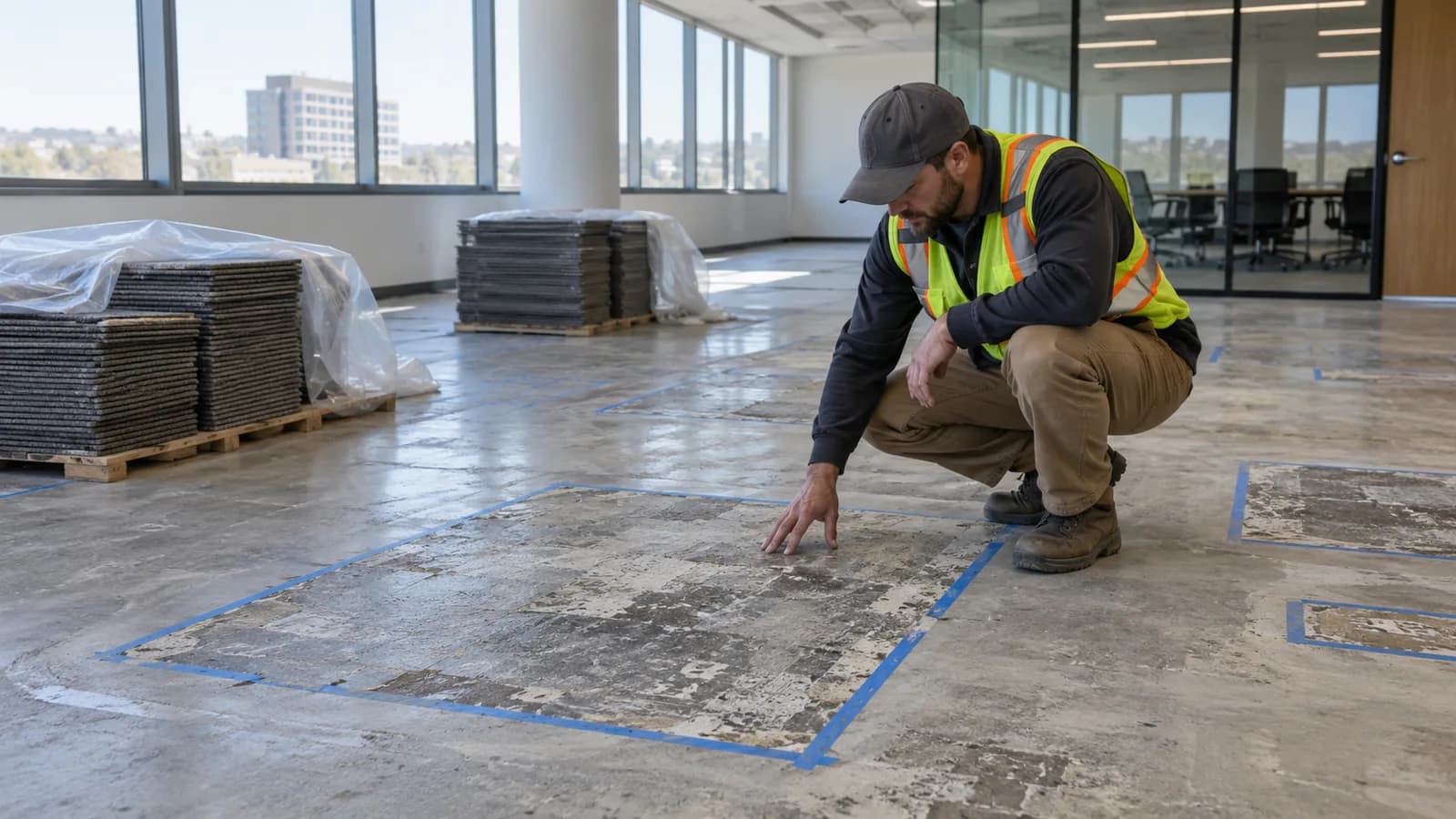
Use hold points before covering the floor
Set four hold points: substrate accepted; preparation method accepted; exact fixing products and application method accepted; and a representative trial area accepted where the project requires one. Do not cover a failed or undocumented hold point.
The installer should have current application instructions at the work face, including open time, coverage, tools and site limits for the selected products. These values come from the approved current documents, not from a generic article.
Issue one coordinated handoff pack
The handoff pack should identify the room, substrate, tile code and backing, preparation sequence, product names and batch records, site readings, trial-area outcome, responsible contacts and any approved deviation.
UNIJOY can help identify the current product record and backing for a shortlisted code. Send the site and fixing-system questions with the exact code so the response follows the product under review.

Browse carpet tile products · Read the subfloor troubleshooting guide · Review backing systems · Download current documents · Discuss the project
Frequently asked questions
Is one pressure-sensitive adhesive suitable for every carpet tile?
No universal choice should be assumed. Suitability depends on the exact carpet tile and backing, substrate, preparation products, site conditions and the current instructions of the involved manufacturers.
Can carpet tile be installed over an existing hard floor?
Only when the project team confirms that the existing finish is permitted, firmly bonded, clean and properly prepared, and that the complete fixing system is approved for that condition.
Who should approve adhesive and primer compatibility?
The project should obtain current written compatibility or product guidance from the carpet tile, adhesive, primer and preparation-product suppliers, coordinated by the specifier and installer.
What changes require the installation system to be checked again?
A change in tile code or backing, substrate, existing finish, repair compound, primer, levelling compound, adhesive, site condition or installation method should trigger reconfirmation.